

Occupational Therapy
Overview
Occupational therapy as a service that can help children develop better handwriting, support students who experience sensory processing difficulties or support a medical patient with an injury to learn to use new adaptive equipment. Occupational therapy is also a tremendously broad field and a profession critical to helping any person achieve function, meaning and success in all activities across their day and life
NESCA is pleased to offer occupational therapy services specifically designed to help children, adolescents and young adults have success in any environment or activity where they want to perform better—at home, in school, during leisure, in the community and during the transition to adulthood.
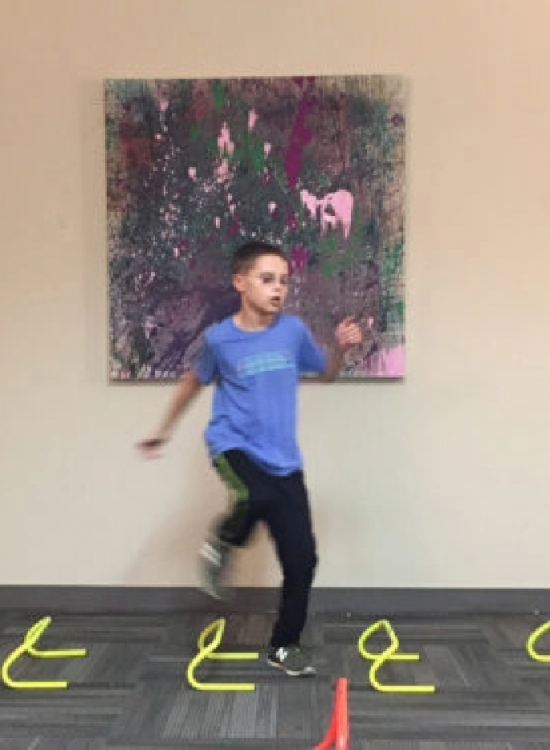
NESCA’s Educational Occupational Therapy Services
Educational Assessment
Our Occupational Therapists will determine which functional supports would best serve students ages K-21 through consultations, observations and various treatments. NESCA’s Occupational Therapists explore an individual’s visual motor integration, visual perception, fine motor, postural stability and actual function based on in-depth observation.
Functional Assessment
NESCA’s experienced OTs assess an individual to identify skills and services necessary for their functional success with home- and community-based activities and tasks.
Observations and assessments in a wide range of everyday areas take place to determine an individual’s strengths and deficits in social communication, navigation, executive functioning, self-advocacy, self-determination, problem solving, stamina and use of technology in real-world environments, for example.
While our assessments incorporate a sensory element, more individualized and specific information on an individual’s sensory profile will be determined through ongoing observation.
Real-life Skills & Executive Functioning Coaching
NESCA’s real-life skills coaching focuses on developing essential adaptive and practical independent living skills in real-world environments. Real-life skills coaching is provided by NESCA OTs as well as NESCA Transition Specialists (who have backgrounds in vocational and college counseling).
Specific, individualized goals are established for continued learning, vocation and community life. Our OTs help clients build skills to assist with Activities of Daily Living (ADLs)—everyday, basic tasks that allow a person to both function and thrive—and Instrumental Activities of Daily Living (IADLs)—more complex tasks that allow a person to live and thrive independently. Our transition specialists help build skills to address transitions specifically to employment or post-secondary learning environments.
Activities of Daily Living we address:
- Self-care/hygiene
- Dressing
- Development of morning/evening routines
Instrumental Activities of Daily Living we address:
- Executive functioning (organization and planning techniques)
- *Travel training/community navigation
- Grocery shopping
- Managing finances
- Meal planning and preparation
- Fitness and nutrition
Transition Skills we addresses:
- Self-advocacy
- Participating in volunteer/community service work
- Managing college application process
- Building skills for navigating transition to a specific college campus
- Finding volunteer, summer, part-time or full-time employment
- Building soft skills for employment or technical skills for a specific job
- Finding leisure and social activities to participate in within one’s community
NESCA’s Direct Sensory-/Motor-based Occupational Therapy Services
NESCA’s OTs target areas of weakness that are impacting daily functioning in the home and community settings. We address difficulties with feeding, self-care and the ability to participate in routines at home, such as chores, bath time and family meals.
NESCA provides individual occupational therapy services focused on development of sensory processing and motor development, to facilitate independence with daily routines at home and in the community, which can translate to:
– better self-regulation, sleep, behavioral control and frustration tolerance
– increased comfort with sports and playground equipment
– improved confidence with social interactions and peer interaction
– Improved physical strength and coordination
– better legibility of handwriting and improved ocular motor and visual perceptual skills
– increased food intake as well as food repertoire and tolerance
– improved tolerance for sensory stimuli and ability to function in group settings”
Occupational Therapy FAQs
Who is this service appropriate for? When might a child need these kids of Occupational Therapy services?
We recommend assessment for children who are displaying any of the following challenges:
– A tendency to withdraw or shut down, or demonstration of heightened activity/anxiety level in groups
– Irritability, inflexibility or a tendency for meltdowns in school, at home or in the community
– Over-reaction to sounds, touch, tastes or visual stimuli
– Aggression towards peers or adults, or poor tolerance for being in close proximity with others
– Low muscle tone, difficulty maintaining seated positions for extended time, fatigue from motor activity
– Delayed gross or fine motor milestones – Awkward or clumsy movement; hesitancy to engage in playground or sports activity
– Frequent falls or poor safety awareness
– Difficulty following directions or learning new motor tasks without frustration
– Poor tolerance for transitions or changes in routine
– Lack of enjoyment with age-appropriate motor tasks
– Difficulty establishing rapport with peers; limited play skills or ability to self-entertain
– Difficulty managing routines, such as dressing, toileting, packing a backpack, completion of daily chores or tasks
– Messy eating or hygiene habits
– Poor feeding
– A child who seems fine at school all day, then falls apart upon returning home
Are OT services at NESCA covered by insurance?
Direct Sensory-/Motor-based OT at NESCA (not educationally-focused), is covered by BCBS and Allways. Speech therapy at NESCA is covered by BCBS, Allways and Harvard Pilgrim.
NESCA can provide receipts for Direct Sensory-/Motor-based OT sessions for clients to attempt to submit to their insurance carrier, should they not have insurance through the above carriers. NESCA does not submit claims to any carrier other than those outlined above and cannot guarantee any reimbursement when claims are submitted to them by the client.
It is also worth noting that Educational OT assessment, consultation and treatment is less often, or less completely, covered by insurance because insurance carriers typically only cover treatments that are deemed “medically necessary.” However, this can be a vital service because students spend such a significant amount of their day and week in school programming.
NESCA’s occupational therapists will determine the level of assessment/evaluation needed based on the availability and quality of previous assessments. Observation, which is part of the evaluation process, is often the most important and revealing assessment tool.
How are Sensory-/Motor-based OT services delivered?
Currently, many of our OT services are being delivered via telehealth due to COVID-19. Some services may be delivered outside of a client’s home or in the community as therapists’ schedules permit. As COVID restrictions lift and the environment begins to feel safer for in-person contact, the therapy department will move toward providing services in the office, as agreed upon by both clinicians and families.