Latest Posts

Therapeutic Toy Guide to Promote Skill-building

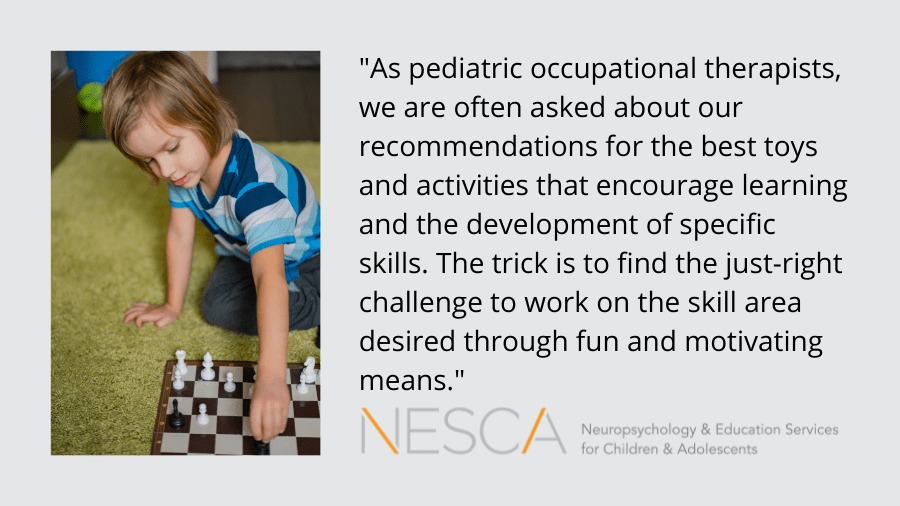
By: Jessica Hanna MS, OTR/L Occupational Therapist, NESCA It’s that time of year when parents and loved ones are looking for the perfect gift. As pediatric occupational therapists, we are often asked about our recommendations for the best toys and activities that encourage learning and the development of specific skills. During an occupational therapy session, toys and games are used...


Assessing Social Skills Challenges: A Developmental Perspective

By:  Stephanie Monaghan-Blout, Psy.D. Pediatric Neuropsychologist As parents and teachers, we want the world for our children, and one of the biggest worries is around social development and friendships. This worry is particularly acute when our child has a learning, emotional, or behavioral challenge that affects their functioning in school, the community, and at home. Knowing more about the developmental...


Career Counseling at NESCA

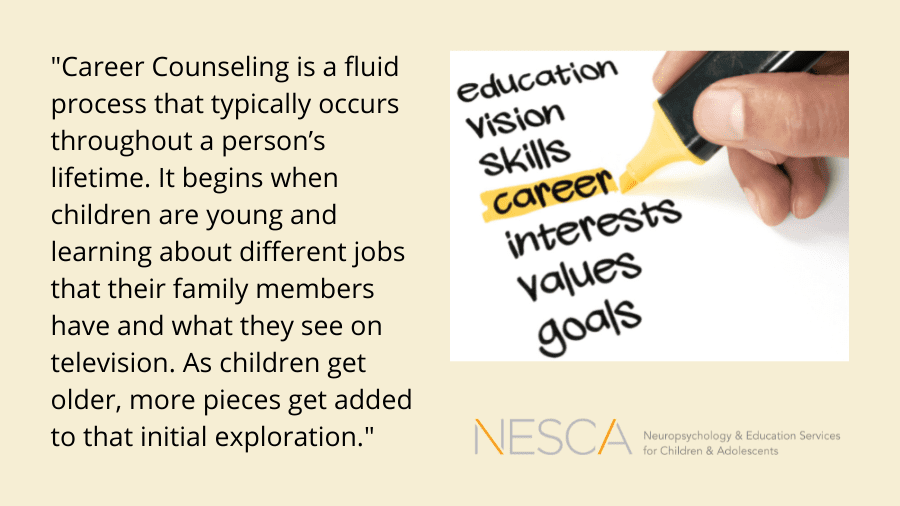
By: Tabitha Monahan, M.A., CRC NESCA Transition Specialist/Counselor Career Counseling is a fluid process that typically occurs throughout a person’s lifetime. It begins when children are young and learning about different jobs that their family members have and what they see on television. As children get older, more pieces get added to that initial exploration. What does Career Counseling through...


Anxiety Reducers for Children and Teens with ASD

By Renée Marchant, Psy.D. Pediatric Neuropsychologist Research indicates that children and teens with Autism Spectrum Disorders (ASD) are more sensitive to heightened physiological sympathetic arousal (the “fight or flight” response), including increased heart rate, breathing rate, feeling “on edge” and body-based tenseness. Heightened physiological arousal is neurologically connected to sensory processing and emotional responses. This is why some children with...


Buyer’s Guide 101: How to Shop for a Pediatric Occupational Therapist

By: Julie Robinson, OT Director of Clinical Services; Occupational Therapist, NESCA As a parent of a child who has just been referred for Occupational Therapy (OT) services, the prospect of what to do next and where to go can be quite confusing. With so many providers in the area, it can be difficult to know who would be the right...


Vocational Aptitude Testing

By: Kelley Challen, Ed.M., CAS Director of Transition Services; Transition Specialist, NESCA Over the past month, my colleague Tabitha Monahan and I have been dedicating our blog entries to vocational assessment as a critical tool for helping students learn about employment and set career goals for themselves. Previous blogs have provided an overview of vocational assessment as well as an...


The Importance of Self-care for Parents

By: Erin Gibbons, Ph.D. Pediatric Neuropsychologist, NESCA As a working mother of two young children, I often feel as if I am being pulled in a million different directions. When I am at work, I want to be present for my clients and families and not distracted by personal problems. When I am at home, I want to leave my...


A Halloween for Those with Sensory Challenges

By: Julie Robinson, OT Director of Clinical Services; Occupational Therapist, NESCA Halloween – a holiday full of tricks and treats. For some children, getting in the Halloween spirit by getting dressed up, carving pumpkins, and going trick-or-treating with friends is what they look forward to all year. For others, dressing up in an itchy costume, not being able to see...


When the Homeymoon Period Is Over: Signs of School Refusal

By: Moira Creedon, Ph.D.  Pediatric Neuropsychologist, NESCA As we reach the end of our second month back to school, many of us may be reaching the end of that glorious honeymoon period – the phase when kids are excited to see friends, optimistic for the school year, and reviewing material they likely already know. For some, the return did not...


Informational Interviews & Job Shadowing

By: Tabitha Monahan, M.A., CRC Transition Specialist/Counselor The last several transition blogs have covered different areas of vocational assessment. Today, I will discuss two further career exploration activities that are incredibly beneficial for students who have an idea of one or several careers they would like to pursue. For these students, an informational interview and/or job shadowing opportunity is an...


Thematic Instruction in Speech-Language Therapy

By Olivia Rogers, MA, CF-SLP Speech-Language Pathologist, NESCA What exactly is a theme and why would we use them in speech therapy? A theme can be defined as the creation of various meaningful activities planned around a central topic or idea. For example, using activities that are all about the ocean, sports, or winter. Themed activities can be great for working...


The Benefits of Working on a Vertical Surface

By: Madelyn (Maddie) Girardi, OTD, OTR/L Occupational Therapist, NESCA What do you mean by a vertical surface? If you think about it, most of the activities children do day to day are completed on a horizontal surface, where toys and tools remain static, in one position. Picture a vertical surface, whether it be a wall, window, or an easel. Working...


Meet NESCA Pediatric Neuropsychologist Miranda Milana, Psy.D.

By: Jane Hauser Director of Marketing & Outreach This September, NESCA welcomed a new neuropsychologist to its team. Learn more about Pediatric Neuropsychologist Miranda Milana, Psy.D., in my interview with her below. Where did your interest in neuropsychology come from? I knew from an early age that I wanted to work with children. I initially thought I would work with...


Interest Inventories

By: Tabitha Monahan, M.A., CRC Transition Specialist/Counselor In the last Transition Thursday blog, Kelley Challen, Director of Transition Services at NESCA, discussed vocational assessments and aptitude testing. As Kelley stated, vocational assessments should be the start of the career exploration process, not the end. When most people think of vocational assessment, interest inventories and surveys are the first things that...


Myth Busters: Bilingualism and Language Delays in Young Children

By Renée Marchant, Psy.D. Pediatric Neuropsychologist Bilingual and multilingual children are often diagnosed with both language disorders and autism spectrum disorders later in development than monolingual children. There are a variety of reasons for later diagnosis, such as disparities in service access or structural inequities in society which limit diagnostic or treatment services for bilingual and multilingual families as well...


What’s the Big Deal about a Pencil Grip?

By: Jessica Hanna MS, OTR/L Occupational Therapist, NESCA With kids back in school, drawings, coloring pages, and written work will make their way from the classroom to backpacks and eventually to the fridge for everyone to admire. From infancy to adulthood, we all hit many milestones in life. Some milestones stand out more than others, but the little ones are...


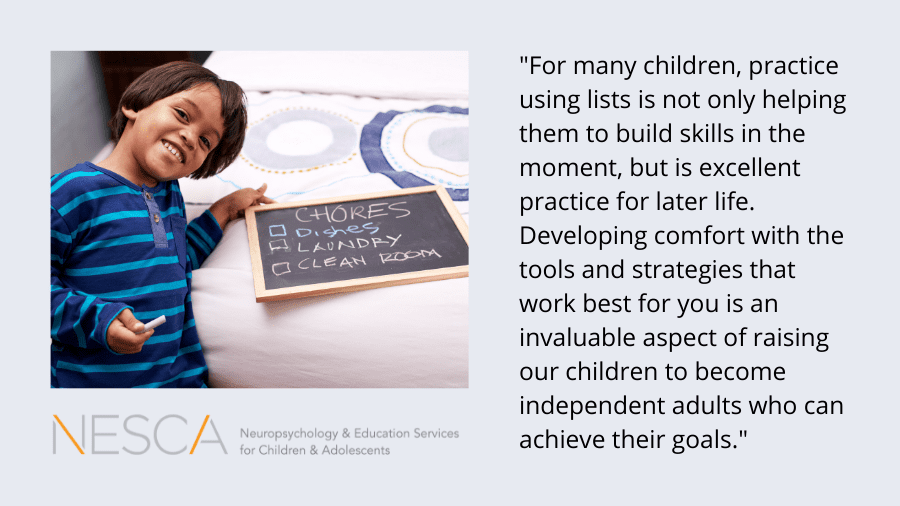
The Power of a List

By Yvonne M. Asher, Ph.D.  Pediatric Neuropsychologist For so many children, adolescents, and young adults, I find myself recommending something that seems too simple to be of much use – a list. The power of lists has been identified and described in depth by several experts, such as Atul Gawande (The Checklist Manifesto – an excellent read). These books often...


Vocational Assessment and Transition Planning

By: Kelley Challen, Ed.M., CAS Director of Transition Services; Transition Specialist, NESCA Transition planning is a complex process centered around helping students, typically who receive special education services, to set goals for their postsecondary adult lives and to engage in learning, services, and experiences that will help them to ultimately reach those goals. Assessment is a critical aspect of this...


When Gaming Is No Longer A Game

By: Cynthia Hess, PsyD Pediatric Neuropsychologist and Therapist Many parents are wrestling with how much time their children are engaging with screens, and finding themselves wondering how much is too much. Children who experience difficulty related to symptoms of ADHD are especially drawn to the stimulation of screens. And children with ADHD tend to require frequent and immediate rewards, making...


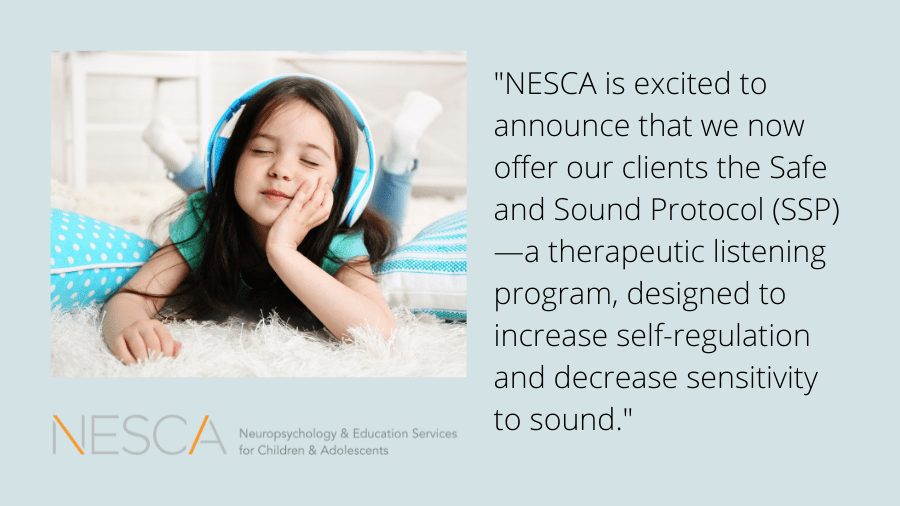
The Safe and Sound Protocol: Increase Self-regulation and Decrease Sound Sensitivity

By: Julie Robinson, OT Director of Clinical Services; Occupational Therapist, NESCA NESCA is excited to announce that we now offer our clients the Safe and Sound Protocol (SSP)—a therapeutic listening program, designed to increase self-regulation and decrease sensitivity to sound. This new service is provided through our occupational therapy (OT) department and is facilitated by either Julie Robinson or Maddie...


The Path Back to Fitness

By: Ann Helmus, Ph.D. NESCA Founder/Director One of the well-known impacts of the pandemic has been the loss of physical fitness in children and adolescents because of the loss of opportunities to play sports and generally move around. In addition, many children and adolescents have gained weight during this time. Maintaining a healthy weight and being physically fit offer many...


Voting Support in Local Elections

By: Tabitha Monahan, M.A., CRC Transition Specialist/Counselor It’s after Labor Day, and the signs for local elections will increase significantly over the next two months. Non-presidential election years see a drastic drop in participation in the voting process. This drop extends even more for years where there are only local elections. However, it is our local elections that have the...


Going with the Flow

By Dot Lucci, M.Ed., CAGS Director of Consultation and Psychoeducational Services, NESCA It’s September, and a new school year has already begun for most children. We had hoped that Covid would be behind us and the start of this school year would begin with a greater semblance of the old normal. Sigh…it has not. We are still wearing masks, keeping...


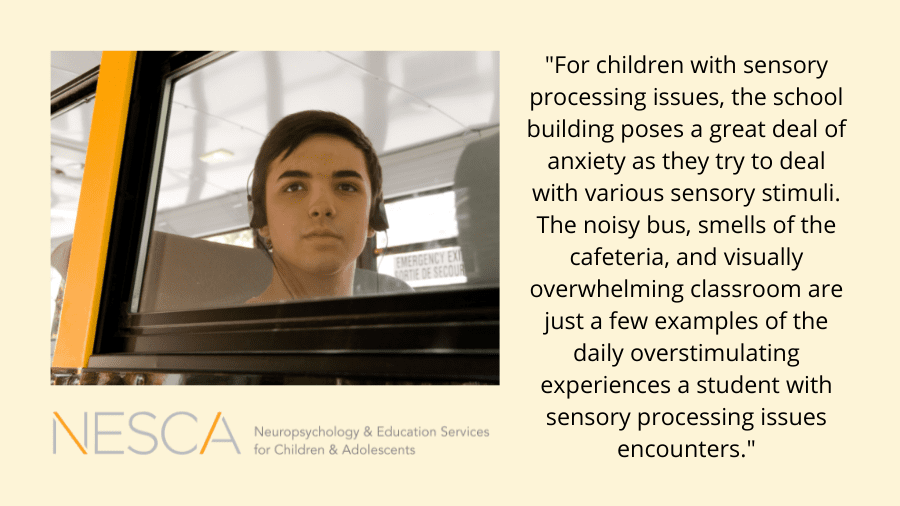
Back to School: Tips for the Sensory-savvy Parent

By Lauren Zeitler, MSOT, OTR/L NESCA Occupational Therapist; Feeding Specialist Just like that, summer is over and it is finally time for children to head back to school! This year might look a little different as we move from remote learning and ease back into the school building full time. For children with sensory processing issues, the school building poses...


Helping Students Transition Back to School

By: Angela Currie, Ph.D. Pediatric Neuropsychologist, NESCA Director of Training and New Hampshire Operations Back in June, I wrote a blog about dealing with uncertainty at the end of the school year. Now, two months later, families are focused on the transition back to school, and a level of uncertainty still remains. Many children are re-entering full in-person learning for...


Transition Training in Today’s Environment

By: Becki Lauzon, M.A., CRC Transition Specialist and Consultant As we head back to school and continue to live with COVID in our lives, it has become apparent that transition services must include training our students to live in this “new normal.” When I sat down to write about back to school tips and suggestions, I was reminded of the...


The Value of Mulligans

By:  Stephanie Monaghan-Blout, Psy.D. Pediatric Neuropsychologist Let’s face it – a lot of parenting involves socializing children whose brains are in the process of being built. This means: They do not yet have the cognitive capacity to understand the moral principles behind such behaviors as “sharing, “being nice” and “using our words.” They are in the process of learning how...


Sensory-friendly Sunscreen for Tactile-sensitive Kids

By: Madelyn (Maddie) Girardi, OTD, OTR/L Occupational Therapist, NESCA Our Sense of Touch Tactile processing is our ability to sense and interpret information from our environment through our sense of touch. Information from our tactile system allows us to gauge everyday sensations such as light touch, temperature, vibration, pressure, or pain. Tactile Defensiveness Tactile defensiveness is a term used to...


The Relationship Between Dyslexia and Dyscalculia

By: Alissa Talamo, PhD Pediatric Neuropsychologist, NESCA “Reading disability (RD) and math disability (MD) are common developmental disorders that are defined by significant academic underachievement that is unexpected based on an individual’s age and development (e.g., American Psychiatric Association, 2000).” Research has shown that children who struggle with learning to read often also struggle with math and understanding numbers. It...


Student Involvement in IEPs: Ten Tips to Help Middle School Students Get Started – Part 2

By: Kelley Challen, Ed.M., CAS Director of Transition Services; Transition Specialist, NESCA As discussed in my previous blog, federal law requires that students with Individual Education Programs (IEPs) be invited to attend their transition IEP meetings. In Massachusetts, this means that students approaching the age of 14, often 8th graders, should be invited to attend their IEP meetings to start...


Growing in a Fog: The Impact of Sleep Loss on Children’s Development

By: Angela Currie, Ph.D. Pediatric Neuropsychologist, NESCA Director of Training and New Hampshire Operations A recent study conducted at the University of Warwick, in the United Kingdom, supported the long-held belief that reduced sleep in children has a significant negative effect on their cognitive and emotional functioning. Findings were recently published in the journal Molecular Psychiatry, in an article, titled...


Handwriting vs. Typing: Where do we draw the line?

By: Sophie Bellenis, OTD, OTR/L Occupational Therapist; Real-life Skills Program Manager and Coach, NESCA For many of our students with dysgraphia, or those who struggle with the fine motor precision and the skills necessary for written output, digital tools and accommodations that promote the use of tech and keyboarding in the academic setting are immensely helpful. These tools allow our...


Does Scatter Matter? How to Understand Your Child Better

By: Moira Creedon, Ph.D.  Pediatric Neuropsychologist, NESCA Families often come to testing with questions like these: My child is so smart, why is reading so hard for them? If she can remember the smallest conversation from three years ago, why can’t she remember the two things I sent her upstairs to get? If he can do all of the calculations,...


Career Counseling at NESCA

By: Tabitha Monahan, M.A., CRC NESCA Transition Specialist/Counselor Career Counseling is a fluid process that typically occurs throughout a person’s lifetime. It begins when children are young and learning about different jobs that their family members have and what they see on television. As children get older, more pieces get added to that initial exploration. What does Career Counseling through...


Speech-Language Pathology at NESCA with Olivia Rogers, MA, CF-SLP

Speech-Language Pathologist Olivia Rogers, MA, CF-SLP, joined NESCA in June, working with clients in the Newton, Massachusetts office, and is scheduling new clients now. We sat down with Olivia to learn more about her, what her passions in speech and language are and why she joined NESCA. By Jane Hauser Director of Marketing & Outreach How did you initially get interested...


Don’t Let Summertime Chores Deflate Your Vibe

By: Jessica Hanna MS, OTR/L Occupational Therapist, NESCA It’s summertime, and let’s face it, nobody wants to do chores. However, through learning about the benefits of chores in a previous NESCA blog post, we realized all that it can bring to the table to improve child development skills. Nevertheless, let’s step back. No one ever said chores must be painful...


Executive Function Skills in the Outdoors

By Renée Marchant, Psy.D. Pediatric Neuropsychologist Executive functioning skills are a “family” of skills that operate in a “top-down” process, controlling and regulating brain regions associated with attention, impulse control, emotion regulation, and meta-cognition or “thinking about thinking.” For more information about executive function skills, please refer to my previous NESCA blog “Teenage Stress and Executive Functioning.” As an evaluator,...


Student Involvement in IEPs: Ten Tips to Help Middle School Students Get Started – Part 1

By: Kelley Challen, Ed.M., CAS Director of Transition Services; Transition Specialist, NESCA Federal law requires that students with Individual Education Programs (IEPs) be invited to attend their transition IEP meetings. In Massachusetts, this means that students approaching the age of 14, often 8th graders, should be invited to attend their IEP meetings to start the process of transition planning if...


Rating Scales/Questionnaires – Why Do We Give Them and Why Do They Matter?

By Yvonne M. Asher, Ph.D.  Pediatric Neuropsychologist When you request a neuropsychological evaluation, you are undoubtably inundated with paperwork. Consent forms, confidentiality forms, COVID forms, and credit card forms. Then, to your surprise, you bring your child to their first appointment, and the neuropsychologist hands you…more forms! Why? What are these forms for, and what will you do with the...


Is It Sensory? Or Is It Behavior?

By: Julie Robinson, OT Director of Clinical Services; Occupational Therapist, NESCA As parents or other caregivers of children with special needs, we can often find ourselves confused between what is a sensory response and what is behavior. Although this is often a complex question, and one without a straightforward answer, there are some tools of the trade that OTs use...


Summer Learning

By: Amity Kulis, Psy.D. Pediatric Neuropsychologist, NESCA As the warm days are here and summer vacation is either upon us or close by, our minds are shifting away from education: homework, studying for tests, and general stress. However, it is important to keep in mind that while summer vacation should be fun, it also provides an opportunity to build on...


Vision Statements

By: Becki Lauzon, M.A., CRC Transition Specialist and Consultant Having been a transition specialist, evaluator and consultant, as well as having worked different roles within the special education system for many years, I have come to learn that the “Post-Secondary Vision Statement” for a student is one of the most overlooked pieces of the transition and IEP process. To me,...


ADHD: Setting Up A Successful Environment

Co-authored by: Lauren Zeitler, MSOT, OTR/L, NESCA Occupational Therapist; Feeding Specialist, and Lindsay Delling, OTS, Occupational Therapy Graduate Student Before any assessments, treatment planning, or suggestions of adaptations take place, we must first understand what attention-deficit/hyperactivity disorder (ADHD) in childhood means, and how it may present and affect each individual child. The American Psychiatric Association defines ADHD as one of the...


The Joys of Career Counseling

By: Tabitha Monahan, M.A., CRC NESCA Transition Specialist/Counselor One of my favorite parts of being a Certified Rehabilitation Counselor is career counseling. In an ideal world, work is not just a paycheck. It’s another way for people to find joy and connect to the world and their community in a way that makes sense for them. Whether it is being...


Dealing with End of the School Year Uncertainty

By: Angela Currie, Ph.D. Pediatric Neuropsychologist, NESCA Director of Training and New Hampshire Operations The end of the school year can bring a lot of emotions, such as excitement for summer activities, sadness about closing relationships, and anxiety related to change. Often, children are experiencing these mixed emotions without truly understanding them. The end of this particular school year may...


Put Me In, Coach!

  Coaching Services at NESCA For students and young adults with social, emotional, organizational and/or learning differences, hands-on instruction in real-world environments is a critical means of developing skills for postsecondary living, learning and working. NESCA is pleased to offer individualized home-, community-,and office-based coaching services as well as remote coaching services, delivered by a team of seasoned Occupational Therapists (OTs),...


Executive Function Tips: The Google Drive

By: Sophie Bellenis, OTD, OTR/L Occupational Therapist; Real-life Skills Program Manager and Coach, NESCA As we slowly start to emerge from lockdown measures, social distancing guidelines, and living life through the screen, there are few lessons that we have learned that still hold importance and should maintain their place in our lives. When it comes to executive function, a lesson...


Understanding Empathy

By:  Stephanie Monaghan-Blout, Psy.D. Pediatric Neuropsychologist Our children are growing up in a social environment that is too often flavored by fear; fear of inexplicable violence, fear of people who look different than us, whose politics are contrary to what we hold dear, people who seem to despise us as much as we discount them. At the same time, we...


Why Work Matters for Teens

By: Kelley Challen, Ed.M., CAS Director of Transition Services; Transition Specialist, NESCA “The share of teens participating in the labor force peaked 40 years ago and has declined ever since.”[1] There are many reasons why employment rates among teens ages 16-19 have declined, such as increased schoolwork and graduations requirements, summer program and extracurricular opportunities, and work competition. Now, roughly...


The Importance of Play in Speech-Language Therapy

By: Abigael Gray, MS, CCC-SLP NESCA Speech-Language Pathologist As a speech-language pathologist, I immediately think about toys and games when planning my therapy sessions. Parents may wonder why speech-language therapy often looks like “just playing.” Children learn about their world through play. It facilitates their cognitive, emotional, physical, and social development. As young children develop, they begin understanding, learning how...


Playgrounds & Their Role in Child Development

By: Madelyn (Maddie) Girardi, OTD, OTR/L Occupational Therapist, NESCA Growing up, I remember spending hours and hours at playgrounds with friends and family. Running around, scraping our knees, and swinging from one structure to the next. While we all know that playgrounds can be loads of fun, the therapeutic benefit children can gain from these unique environments is often overlooked....


Why Kids Need to Outdoor Free Play

By: Angela Currie, Ph.D. Pediatric Neuropsychologist, NESCA Director of Training and New Hampshire Operations One of the best ways to make the most of your summer is to get outside and engage in lots of outdoor play. We live in a society where we tend to over-schedule ourselves and our children. Particularly during the school year, this makes it very...


Bolstering Transition Skills in Another Summer of COVID-19

By: Becki Lauzon, M.A., CRC Transition Specialist and Consultant With rules and regulations around COVID-19 beginning to change, I took the time to reflect on a blog that I wrote almost exactly one year ago today. That blog focused on how bolster skills during the summer months when COVID-19 restrictions had limited so many of the hands-on, community-based and real-world...


Executive Function Tasks – Medication Management

By: Sophie Bellenis, OTD, OTR/L Occupational Therapist; Real-life Skills Program Manager and Coach, NESCA Medication management is an extremely complex executive function task that many of our students will have to master before they are able to tackle living alone. While there are many executive function tools available to help organize and remind individuals about their medication, there are also...


The Use of Adaptive Behavior Rating Scales in Neuropsychological Assessment

By Jason McCormick, Psy.D. Pediatric Neuropsychologist In my work as a neuropsychologist, much of my practice involves assessment geared toward transition planning – the move from high school to college or from high school to the working world. For these cases, I find the use of measures of adaptive behavior skills – day-to-day skills associated with self-care, communication, community navigation,...


Why Taking Competency Tests, like the MCAS, can be Critical for Transition and College Planning

By: Kelley Challen, Ed.M., CAS Director of Transition Services; Transition Specialist, NESCA Most states require some form of competency testing for students, particularly students who will graduate with a state standard diploma. But in the past year, standardized competency testing has become more complicated, if not impossible, to carry out. In Massachusetts, graduation requirements have been altered for several grades...


Cyberbullying and Autism Spectrum Disorders

By Yvonne M. Asher, Ph.D.  Pediatric Neuropsychologist I recently had the opportunity to attend a webinar by Justin Patchin, Ph.D., one of the foremost cyberbullying researchers. I have used his work myself in designing both my master’s thesis and doctoral dissertation research, so it was wonderful to hear him speak. He began with a story about his childhood and some...


Learning to Ride a Bike: A Rite of Passage

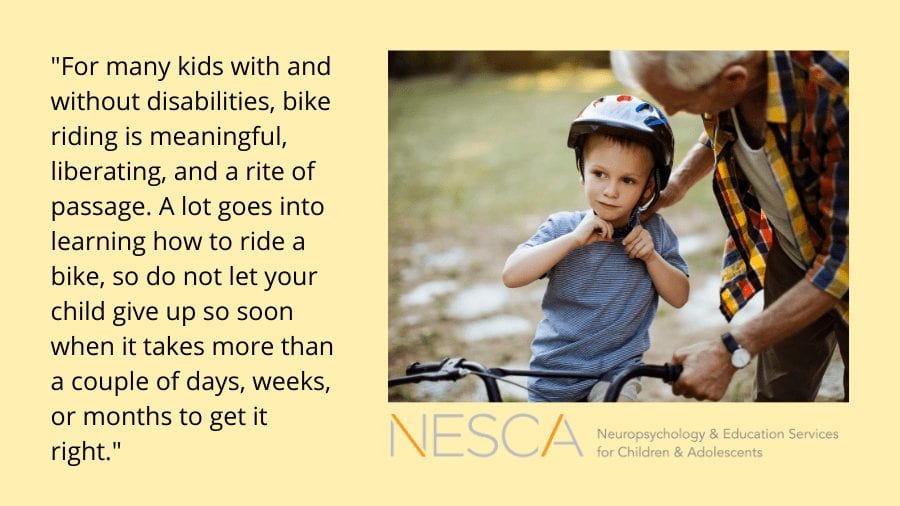
By: Jessica Hanna MS, OTR/L Occupational Therapist, NESCA If there is one positive takeaway from the COVID-19 pandemic, it’s the ever-growing love for being outdoors. It’s spring, the flowers are blooming, the sun is out, and the air is light. Everything in our body is telling us to go outside and play. For many kids with and without disabilities, bike...


Daily Journaling While Social Distancing

By Dot Lucci, M.Ed., CAGS Director of Consultation and Psychoeducational Services, NESCA *This post was originally published almost a year ago. While we slowly start to emerge from our quarantine and begin to safely re-engage in some of the activities and duties from our pre-pandemic lives, it is important to remember to participate in activities to better ourselves and others...


Diplomas, Graduation Dates and IEP Transition Services Revisited

By: Kelley Challen, Ed.M., CAS Director of Transition Services; Assistant Director, NESCA Three years ago, on March 26, 2019, the Massachusetts Department of Elementary and Secondary Education (DESE) sent out an important administrative advisory regarding transition services and graduating with a high school diploma (Administrative Advisory SPED 2018-2: Secondary Transition Services and Graduation with a High School Diploma). At the...


Counseling/Therapy: So Many Types and Approaches…Which One Should I Choose?

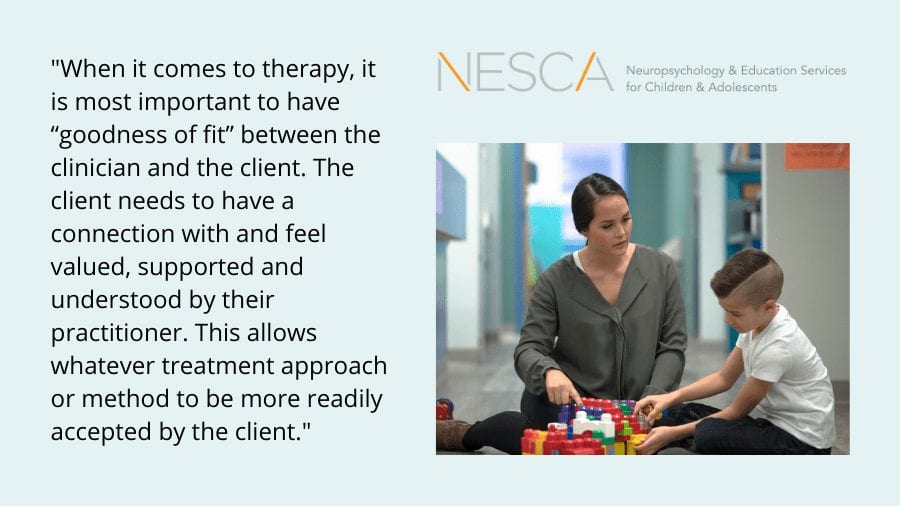
By Dot Lucci, M.Ed., CAGS Director of Consultation and Psychoeducational Services, NESCA Many adults, teens and children struggle with a myriad of challenges from everyday stressors, feelings of worthlessness and insecurities to official diagnoses of anxiety, depression, PTSD, eating disorders, OCD, addiction, and more. Deciding how to grow and change and alleviate the pain and suffering can be daunting. There...


Executive Function Tools: Natural Consequences

By: Sophie Bellenis, OTD, OTR/L Occupational Therapist; Real-life Skills Program Manager and Coach, NESCA In my last blog that focused on executive function tools, I delved into the benefits of using and committing to a digital calendar. The calendar is a concrete tool that can be directly taught to students using traditional methods. Less concrete, but in many ways equally...


Looking for Answers? Ask the Right Questions.

By: Ann Helmus, Ph.D. NESCA Founder/Director; Clinical Neuropsychologist Many parents have met with me concerned that, “We had a full evaluation and got a lot of scores and a diagnosis but we still don’t understand why our child has this problem and what we can do about it.” This outcome can be avoided if parents and the evaluator are both...


Resilience, Covid and College Admissions

By: Tabitha Monahan, M.A., CRC NESCA Transition Specialist/Counselor It’s been a year since schools across the nation closed their doors and moved education to the world wide web. Teachers, many of whom have never received training to teach in a virtual format, were now providing lessons remotely. The challenges of teaching remotely highlighted many of the disparities that affect our...


Autism Awareness Month

By Dot Lucci, M.Ed., CAGS Director of Consultation and Psychoeducational Services, NESCA So what? What does it really mean to have an awareness month and a designated day? April is Autism Awareness month, and this year April 2 was World Autism Awareness Day, established by the United Nations (UN) in 2008. In general, these designations are meant to bring awareness...


Mind the Gap: Why You Should Consider Summer OT and Speech Services at NESCA

By: Julie Robinson, OT Director of Clinical Services; Occupational Therapist, NESCA It has been a challenging school year, with ever-changing schedules, routines, and unfortunately with a good deal of inconsistency in the provision of therapeutic services through the schools, due to the many impacts of COVID. Parents, caregivers and students have all experienced differing levels of anxiety about what progress...


Facilitating Language Growth at Home

By: Abigael Gray, MS, CCC-SLP NESCA Speech-Language Pathologist I recently got to spend time with my 18-month-old nephew, after not having seen him in a year and a half due to the pandemic. It got me thinking about practical ways to help facilitate language throughout the day without feeling like you’re doing anything extra. Play and routines are great times...


Giftedness – What does it mean, and how do I know if my child is gifted?

By: Alissa Talamo, PhD Pediatric Neuropsychologist, NESCA All children have learning strengths and weaknesses, and as parents we are proud of all our children. However, there are some children who are precocious and seem to learn many skills early and with ease. According to the National Association of Gifted Children, there are certain characteristics that parents will often notice and...


Appreciating and Responding to The New York Times article, For Some Teens, It’s Been a Year of Anxiety and Trips to the E.R. by Benedict Carey

By: Sophie Bellenis, OTD, OTR/L Occupational Therapist; Real-life Skills Program Manager and Coach, NESCA As an occupational therapist working almost exclusively with teenagers and young adults over the past year, the title of Benedict Carey’s article jumped out at me like a tired and worn flag, waving frantically for acknowledgement. Our teens are anxious, tired, and dealing with living through...


The Uncertainty, Stress and Anxiety About What School Will Look Like

*This blog post was originally published prior to the start of in-person school last fall for some. While many students have returned to their school buildings, many others are just now returning or will be in the coming weeks.  By: Cynthia Hess, PsyD Pediatric Neuropsychologist Fellow and Therapist Much of adjusting to the world in the midst of a global...


College Transition – Important Considerations for Students with Disabilities who are Making a Final Decision

By: Kelley Challen, Ed.M., CAS Director of Transition Services; Assistant Director, NESCA May 1st is often referred to as “College Decision Day,” the deadline by which students must submit their deposit and commit to enrolling at the college of their choice. Given that students are applying to an increasing number of colleges, with multiple “safety schools” on their application lists,...


Helping Your Anxious Child through COVID-19

  Almost a year into Covid-19, many of us can use this blog as a reminder when our children exhibit signs of anxiety from learning of new developments with the pandemic; friends, family or others testing positive for Covid-19; or returning to school. The guidance shared in this blog still holds true, nearly one year since many of us went...


A Feeding Therapist’s Guide to Cups, Bowls, and Utensils – Part 1

By Lauren Zeitler, MSOT, OTR/L NESCA Occupational Therapist; Feeding Specialist As an important area of development, feeding and eating time is a special opportunity for children to not only grow, but also interact with their environment. This includes transitioning from breast and bottle feeding to cups, bowls, and utensils. With so many options available on the market, it can be...


Media’s Portrayal of our Differences

By Dot Lucci, M.Ed., CAGS Director of Consultation and Psychoeducational Services, NESCA Media has portrayed all aspects of society’s strengths, as well as its ugliness, the diversities of its peoples and cultures, political topics, events in history and so much more for as long as television and movies have existed. Often, television and movies try to stay within norms, while,...


Celebrate the Small Wins

By: Tabitha Monahan, M.A., CRC NESCA Transition Specialist/Counselor In the moment, it can be hard to see the change. It can be hard to find the successes. This is true for any improvement we try to do, whether it is trying to have a healthier lifestyle or build the skills needed for postsecondary life. When looking at a student’s vision,...


School Stressors in a Pandemic

By: Amity Kulis, PsyD Pediatric Neuropsychologist, NESCA A recent article published by NBC News highlights the multiple stressors facing school-aged children and their families during this pandemic, with a more specific focus on the differing stress levels between remote and in-person learners. It is becoming clearer that during this time, learners and their families are facing higher rates of depression...


Executive Function Tools: The Calendar

By: Sophie Bellenis, OTD, OTR/L Occupational Therapist; Real-life Skills Program Manager and Coach, NESCA When working with young adults and adolescents to build up executive function skills, my main goal is to find systems and strategies that are truly helpful, easily accessed and that will eventually be used independently. While there are many fabulous apps that have been developed to...


How to Not Worry Alone: Signs Your Teen May Need More Help

By: Moira Creedon, Ph.D.  Pediatric Neuropsychologist, NESCA As we reach nearly a year since children and teens in Massachusetts were sent home from school, many of us are experiencing the sadness and disappointment that comes from chronic stress. Combined with colder weather keeping us indoors and more limited daylight, it’s certainly harder for us to stay positive and upbeat. Children...


Generalizing Skills from the Classroom to Home and Community – Part 2

By: Becki Lauzon, M.A., CRC Transition Specialist and Consultant Back in my December blog, I delved into the question, “How do I get my students to transfer the skills they are learning in school to the home environment?”.  As I mentioned then – and which is still true now – this is a question that almost every parent thinks and...


Anxiety Reducers for Children and Teens with ASD

By Renée Marchant, Psy.D. Pediatric Neuropsychologist Research indicates that children and teens with Autism Spectrum Disorders (ASD) are more sensitive to heightened physiological sympathetic arousal (the “fight or flight” response), including increased heart rate, breathing rate, feeling “on edge” and body-based tenseness. Heightened physiological arousal is neurologically connected to sensory processing and emotional responses. This is why some children with...


The Benefits of Sensory-based Play

By: Madelyn (Maddie) Girardi, OTD, OTR/L Occupational Therapist, NESCA The importance of play for child development Play is considered an essential aspect of child development as it contributes to cognitive, physical, social and emotional well-being. As a pediatric occupational therapist, play is an integral part of my job. When children have opportunities to play, this allows them to build their creativity...


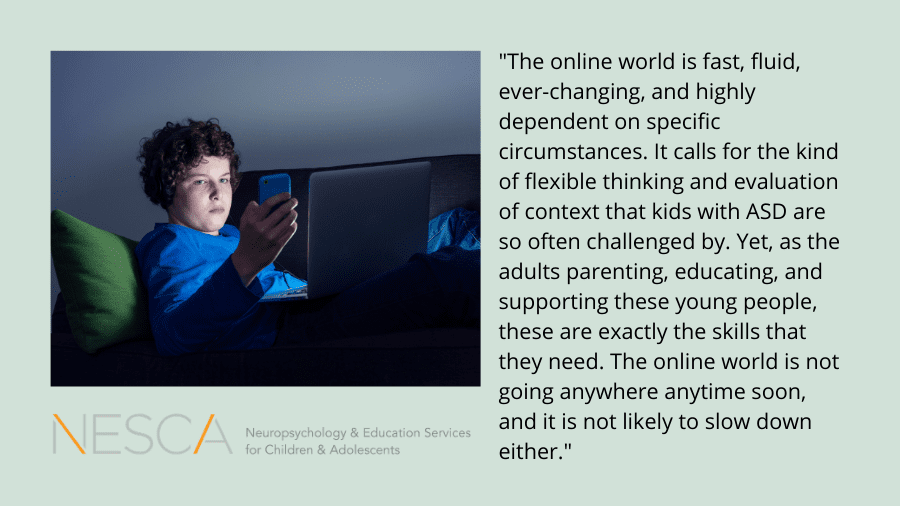
Teens Online: Participation vs. Observation

By Yvonne M. Asher, Ph.D.  Pediatric Neuropsychologist As we enter the beginning of 2021, the COVID-19 pandemic continues to shape our world. More and more, events, activities and interactions are pushed online – onto videoconferencing apps, social media and academic learning  platforms. Online social interactions are not new, and they won’t disappear anytime soon. With this, how do we, as...


Changes in Transitioning from School-based Services to DDS Adult Services during COVID-19

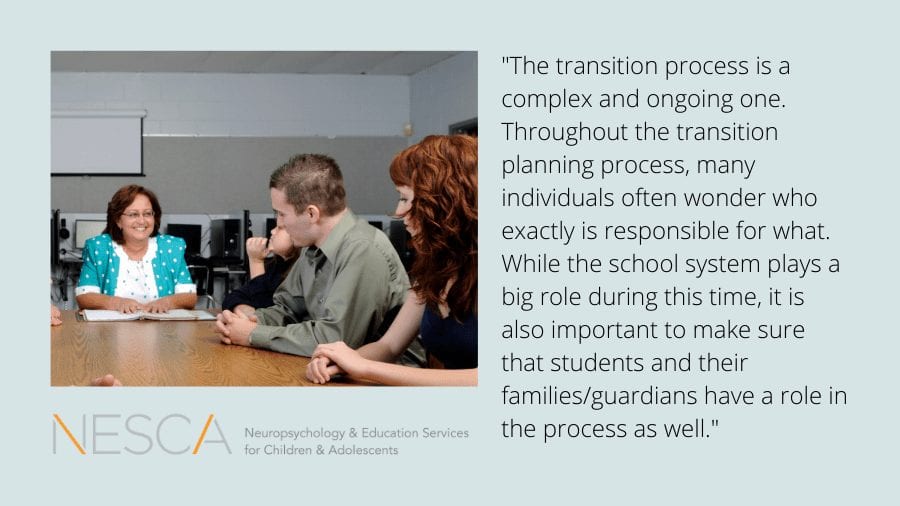
By: Kelley Challen, Ed.M., CAS Director of Transition Services; Assistant Director, NESCA Transitioning from public education to adult human service supports is a complicated process that we have covered in several blogs over the years here at NESCA, including the two recent resources linked below: Preparing for the Transition from Special Education to Adult Services – April 30, 2020 Transition...


Literacy-based Speech Therapy: Winter Edition

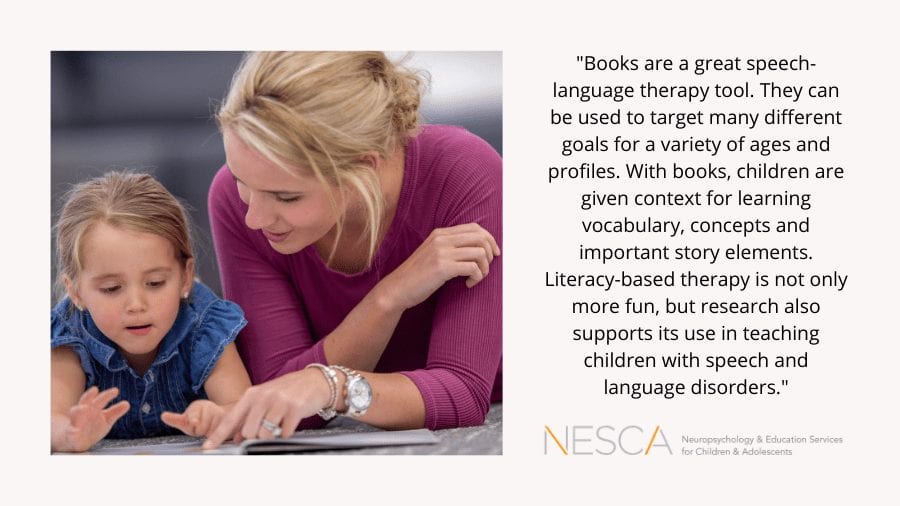
By: Abigael Gray, MS, CCC-SLP NESCA Speech-Language Pathologist Books are a great speech-language therapy tool. They can be used to target many different goals for a variety of ages and profiles. With books, children are given context for learning vocabulary, concepts and important story elements. Literacy-based therapy is not only more fun, but research also supports its use in teaching...


When Gaming Is No Longer A Game

By: Cynthia Hess, PsyD Pediatric Neuropsychologist and Therapist Many parents are wrestling with how much time their children are engaging with screens, and finding themselves wondering how much is too much. Children who experience difficulty related to symptoms of ADHD are especially drawn to the stimulation of screens. And children with ADHD tend to require frequent and immediate rewards, making...


Developing S-M-A-R-T Goals in 2021

By: Tabitha Monahan, M.A., CRC NESCA Transition Specialist/Counselor Happy New Year! Now two weeks into 2021, maybe it’s time to revisit those New Year Resolutions.  French writer Antoine de Saint-Exupéry wrote: “a goal without a plan is just a wish.” This is true for resolutions, just as it is for any goal. How can we help our young people change...


The Intention to Thrive

By: Ann Helmus, Ph.D. NESCA Founder/Director As I reflect on the year that we have all come through, my overwhelming emotion (aside from exhaustion) is pride in the NESCA team for working together in an extraordinary manner under incredibly challenging circumstances. Just before closing the doors at NESCA in mid-March, I wrote to all staff: NESCA is going to not...


Teletherapy at NESCA – Benefits and How It Works

By: Julie Robinson, OT Director of Clinical Services; Occupational Therapist, NESCA Now that the second  COVID-19 surge is upon us, many families are again opting to receive occupational, speech-language and feeding therapy services through teletherapy. While COVID-19 is interrupting so many things in our lives, it does not have to interrupt important therapy services. Our clinicians at NESCA encourage teletherapy...


Approaching 2021 with Ease and Grace

By Dot Lucci, M.Ed., CAGS Director of Consultation and Psychoeducational Services, NESCA I think we are all relieved that 2020 is behind us. All of us experienced a “mental health crisis” of some level of anxiety, depression and fear since March, 2020. As the pandemic spread across our globe, ravaged our lives, took loved ones from us, created economic upheaval,...


Generalizing Skills from the Classroom to Home and Community – Part 1

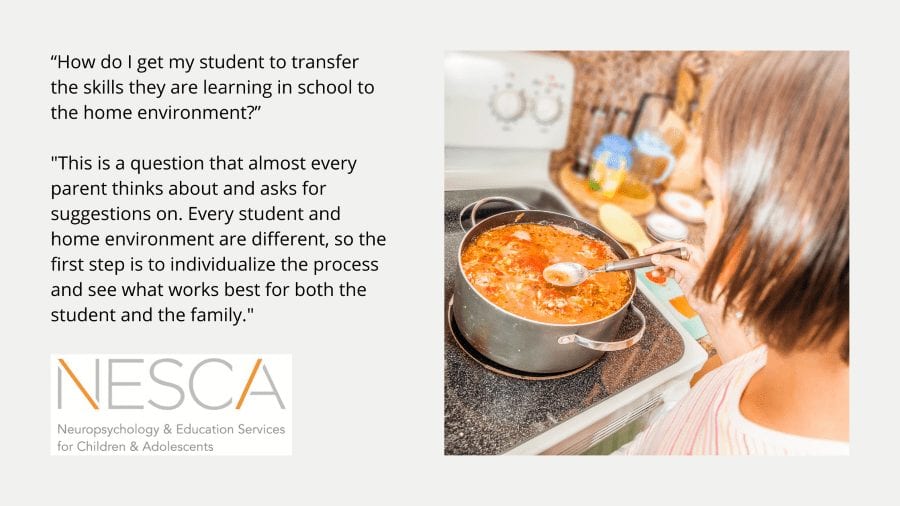
By: Becki Lauzon, M.A., CRC Transition Specialist and Consultant “How do I get my student to transfer the skills they are learning in school to the home environment?” This is a question that almost every parent thinks about and asks for suggestions on. I wish I had a simple answer and something that could solve this for each and every...


Meet Abigael Gray, NESCA’s Speech-Language Pathologist & Feeding Specialist

This Fall, NESCA debuted its new feeding, speech and language and direct sensory/motor occupational therapy services. Leading NESCA’s feeding and speech and language therapy is Abigael Gray, MS, CCC-SLP. In today’s blog, we sat down with Abbey to learn about her role as a Feeding Specialist; Speech-Language Pathologist. What led you to your interest in speech and language and feeding,...


Digital Literacy, Executive Function and Remote Learning

By: Sophie Bellenis, OTD, OTR/L Occupational Therapist; Real-life Skills Program Manager and Coach, NESCA The experience of watching a small child who is only two or three years old pick up a smartphone, quickly type in a passcode (as they have memorized the pattern) and open up their favorite game can be jarring for adults who remember the days of...