Latest Posts

I Can Tell You a Story…I Just Can’t Write It

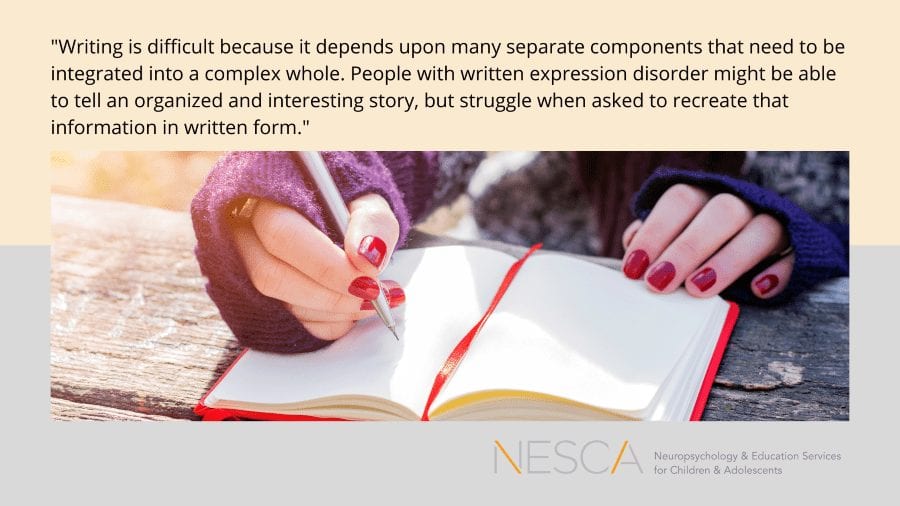
By: Alissa Talamo, PhD Pediatric Neuropsychologist, NESCA According to understood.org, “Written expression disorder is a learning disability that results in a person having trouble expressing their thoughts in writing… They might have the greatest ideas, but their writing is disorganized and full of grammar and punctuation mistakes.” Experts believe that between 8 and 15 percent of people have a written expression...
Transition Assessment: What is it anyway? How is it different from neuropsychological evaluation?

By: Kelley Challen, Ed.M., CAS Director of Transition Services; Assistant Director, NESCA If you have a child who receives special education services or work in education, you are likely familiar with the Individuals with Disabilities Education Improvement Act of 2004 (IDEA 2004). This is the law that guarantees students with disabilities the right to free appropriate public education (FAPE) and...


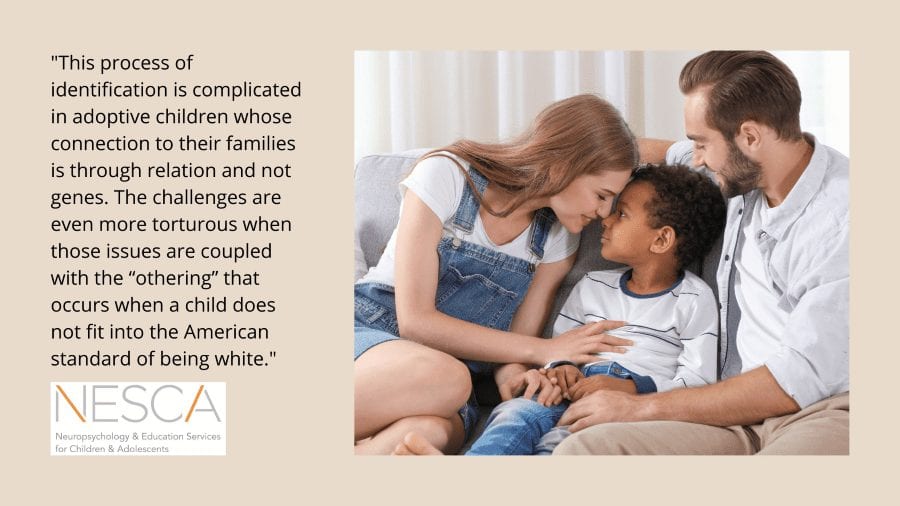
When No One Looks Like Me

By:  Stephanie Monaghan-Blout, Psy.D. Coordinator of Therapy Services; Trauma-informed Therapist; Pediatric Neuropsychologist We form our sense of identity by “trying on” aspects of other people to see how their ideas, tastes and values “fit,” keeping those things that seem to resonate and discarding those that don’t. We find those models for identification in our families, schools and community. We also...


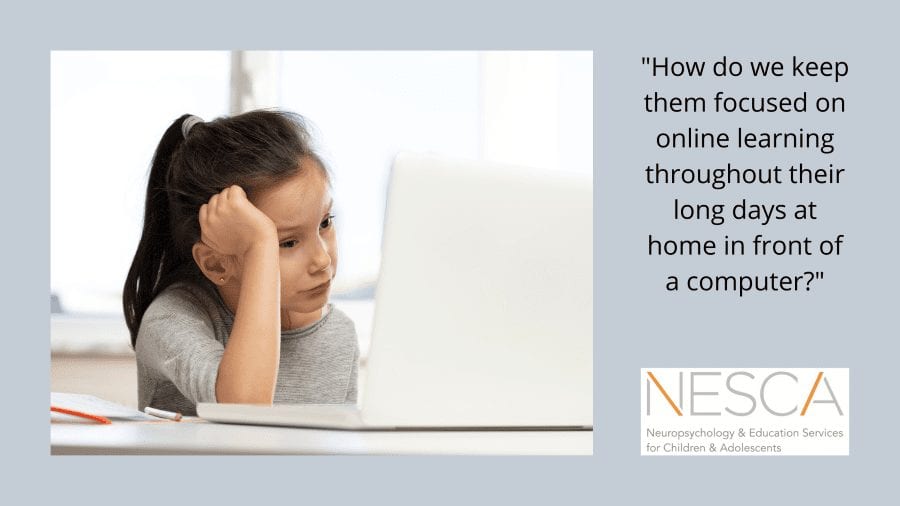
Movement Breaks – Part 2

By: Julie Robinson, OT Director of Clinical Services; Occupational Therapist, NESCA In our last blog, we delved into ideas and suggestions to help preschoolers stay on track with remote and hybrid learning through movement breaks. In this week’s OT Tuesday blog, we move up to our elementary school-aged kids. How do we keep them focused on online learning throughout their...


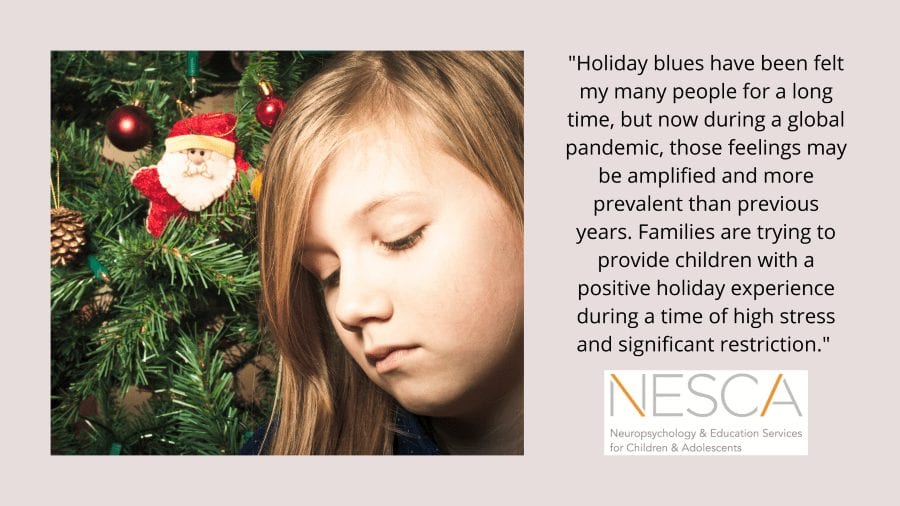
The Holiday Blues Coupled with Covid

By: Angela Currie, Ph.D. Pediatric Neuropsychologist, NESCA Director of Training and New Hampshire Operations The holidays can be a time of great joy, but they can also be a time of great stress. Celebrations and merriment can be contrasted with pressure to amaze, long to-do lists, financial constraints or reminders of those we have lost. For many, it is a...


Transition Planning for Adulthood—It Starts at Birth

  By: Kelley Challen, Ed.M., CAS Director of Transition Services; Transition Specialist There are many transitions throughout a person’s life, but as a transition specialist working at a pediatric neuropsychology practice, my focus is most often on helping students who have struggled with learning, social and/or emotional difficulties to plan for and successfully navigate the transition from secondary school to whatever...


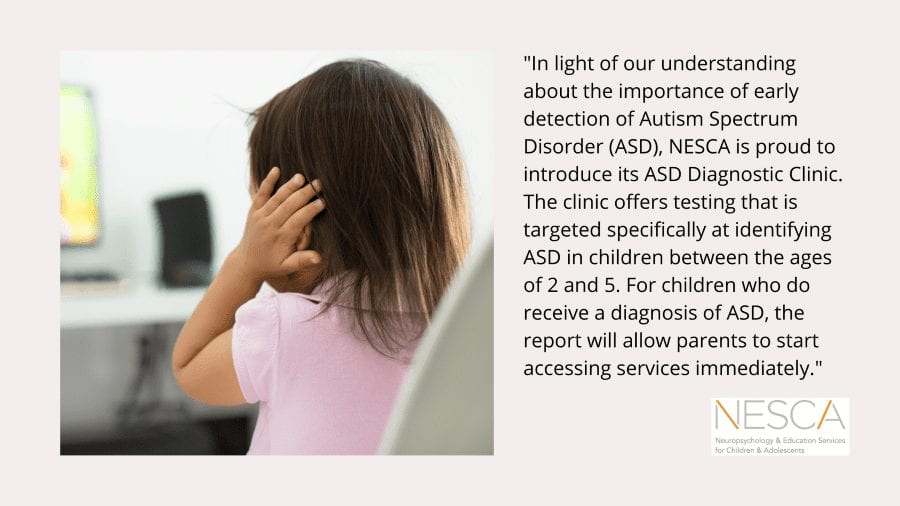
Early Detection of Autism: NESCA’s New ASD Diagnostic Clinic

By: Erin Gibbons, Ph.D. Pediatric Neuropsychologist, NESCA Children with autism spectrum disorder (ASD) vary widely in terms of the intensity of their symptoms as well as the age at which symptoms emerge. In some cases, signs of autism are apparent during infancy. For other children, concerns about autism might not arise until toddlerhood or even early childhood. As neuropsychologists, we...


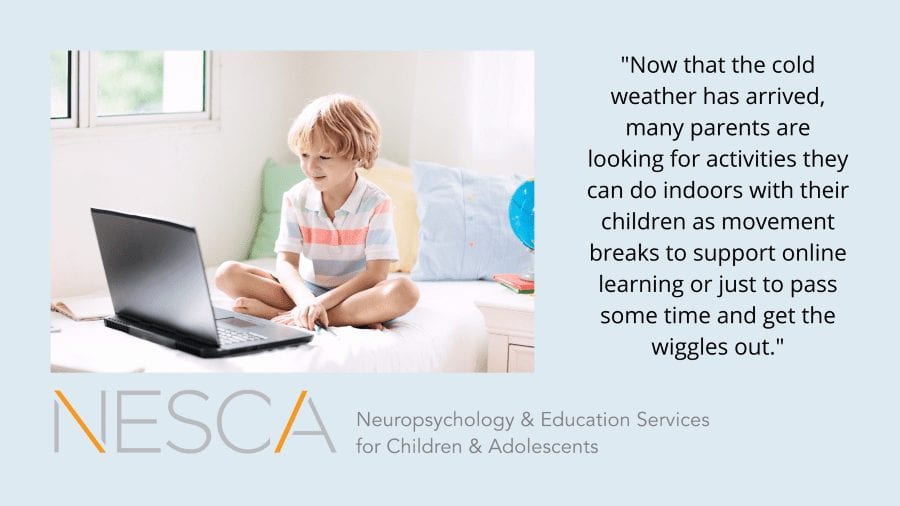
Movement Breaks – Part 1

By: Julie Robinson, OT Director of Clinical Services; Occupational Therapist, NESCA Many parents are overwhelmed, juggling homeschooling, childcare and work from home. And now that the cold weather has arrived, many parents are looking for activities they can do indoors with their children as movement breaks to support online learning or just to pass some time and get the wiggles...


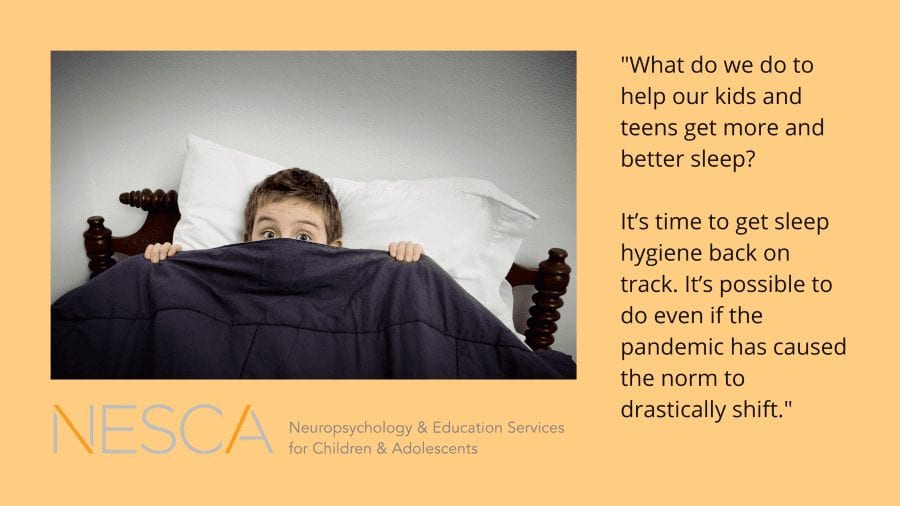
Good Night, Sleep Tight: What if I Can’t Sleep Right?

By: Moira Creedon, Ph.D.  Pediatric Neuropsychologist, NESCA The American Psychological Association recently issued a press release about the impact of the COVID-19 pandemic on our dreaming. Not surprisingly, the information in four published articles indicates that people are having more anxious dreams now. This seems obvious given the emotional toll and high levels of stress as everyone juggles work, virtual...


Building Gratitude in our Kids

By: Tabitha Monahan, M.A., CRC NESCA Transition Specialist/Counselor Would it be November without a blog post about gratitude? Gratitude feels both more important and harder to come by this year with the slew of events bombarding people’s personal lives and something different appearing what feels like every news cycle. But there must be something to all this gratitude if everyone...


Is My Child a Picky Eater or Problem Feeder?

Co-authored by: Abigael Gray, MS, CCC-SLP, NESCA Speech-Language Pathologist; Feeding Specialist, and Lauren Zeitler, MSOT, OTR/L, NESCA Occupational Therapist; Feeding Specialist Do you have a child who presents as a picky eater? Have you ever wondered if their difficulties are more than just “picky eating”? Are mealtimes stressful for your family? There is someone out there who can help you!...


Getting Through Thanksgiving Day

By: Madelyn (Maddie) Girardi, OTD, OTR/L Occupational Therapist, NESCA Setting Expectations Thanksgiving may be different this year, but it can still be a long day full of sensory stimulation, new social interactions and possibly unfamiliar faces and experiences. By providing clear expectations, this can help prepare the child for upcoming events, minimize surprises and set the child up for success. Talk...


Key Facts about Early Diagnosis of Autism Spectrum Disorder (ASD)

By Renée Marchant, Psy.D. Pediatric Neuropsychologist Early diagnosis is a catalyst for propelling children on positive trajectories. If a family and child identify and focus on areas of growth earlier rather than later, there is more time and more possibility of change and improvement. This tenant is particularly critical for diagnosing ASD in toddlerhood and early childhood. Here are critical...


Linking Strengths and Interests to College Majors and Careers: The MassHire Career Information System

By: Kelley Challen, Ed.M., CAS Director of Transition Services; Assistant Director, NESCA Due to Covid-19, many schools are functioning in a hybrid or remote learning status, making access to school-based guidance counselors, college counselors and transition personnel more complicated. Consequently, I am working with an unusually high number of high school students and families to provide assistance with the college...


Positive Coping Strategies for Stress, Anxiety and Trauma During Times of Crisis

By Renée Marchant, Psy.D. Pediatric Neuropsychologist Amidst the global pandemic, children, their caregivers, their teachers and therapists are naturally experiencing heightened stress and anxiety. We are more likely to be sent into “fight, flight, freeze, mode” – the body and brain’s critical survival strategy to prepare and deal with perceived threat. For example, when you see a Grizzly Bear on...


OTs’ Remote Learning Equipment Tips!

Co-authored by: Sophie Bellenis OTD, OTR/L and Jessica Hanna MSOT, OTR/L With the momentous shift in education this year, many families are looking for support with the remote learning or hybrid learning process. Children are facing new barriers to education, such as inability to focus within the home setting, inappropriate work space and lack of independence with attention, initiation and...


Kids Want to Do Well and Would If They Could

By: Cynthia Hess, PsyD Pediatric Neuropsychologist Fellow and Therapist Ross Greene, Ph.D., is the author of several books including The Explosive Child, Lost at School, Lost and Found, and his most recent book, Raising Human Beings. He also is the founder of Lives in the Balance, a non-profit dedicated to supporting families with behaviorally challenging children. The foundation of his...


What Is A Representative Payee?

By: Tabitha Monahan, M.A., CRC Transition Specialist/Counselor Your child has turned 18. The application for Supplemental Security Insurance (SSI) has been submitted and approved. You’ve been assigned to be the representative payee to manage the SSI funds. How can you still help your child gain money management skills while managing the responsibilities as required by the Social Security Administration (SSA)?...


Organizing Screen Time During Remote Learning

By Dot Lucci, M.Ed., CAGS Director of Consultation and Psychoeducational Services, NESCA Working remotely has placed all of us on our screens more. My eyes, back and head hurt!  For months, screen time has been our lifeline to our family and friends, work and learning. Adults and children are on screens to connect with our families/friends, to learn, to play...


The Ideal Remote Learning Workspace

Co-authored by: Sophie Bellenis OTD, OTR/L and Jessica Hanna MSOT, OTR/L Designated Space for Schoolwork – Make sure to set up a workspace with intention. While it may be easy to have children hop on the couch or sit at the kitchen table, having a space that is specifically used for academics will help them to compartmentalize and associate the...


Developing Self-Motivation So It Sticks

By Dot Lucci, M.Ed., CAGS Director of Consultation and Psychoeducational Services, NESCA Motivation can be elusive for many of our students especially for activities they don’t like, they don’t find interesting or they find challenging. In other blogs, I’ve written about the 3 S’s: self-awareness, stress management and social competency, as keys to thriving in life. For this blog, self-awareness...


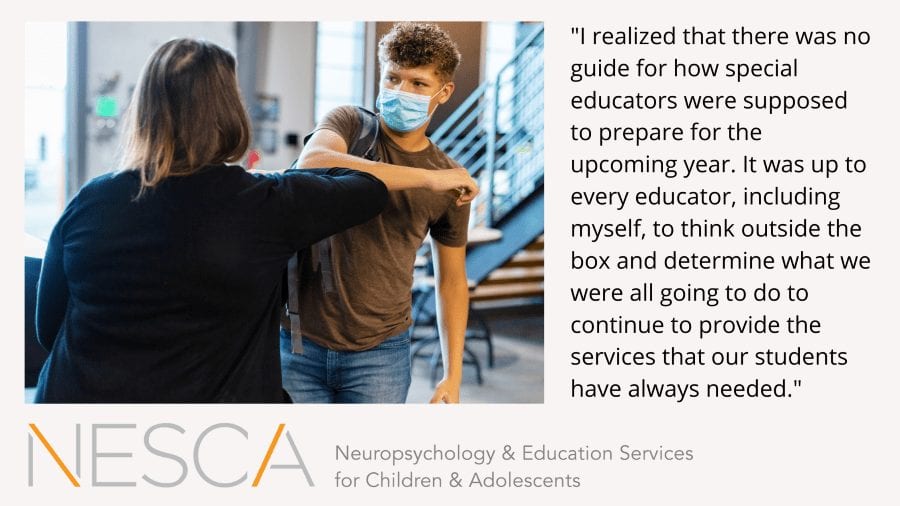
A Week in the Life of a Transition Teacher During COVID-19

By: Becki Lauzon, M.A., CRC Transition Specialist and Consultant PPE, 6 feet apart, no sharing of materials, remote learning, handwashing, social distancing, hybrid learning…. These are just a few of the thoughts that went through every educator’s mind prior to the start of the 2020 school year. Making a personal decision to go back to teaching in the midst of...


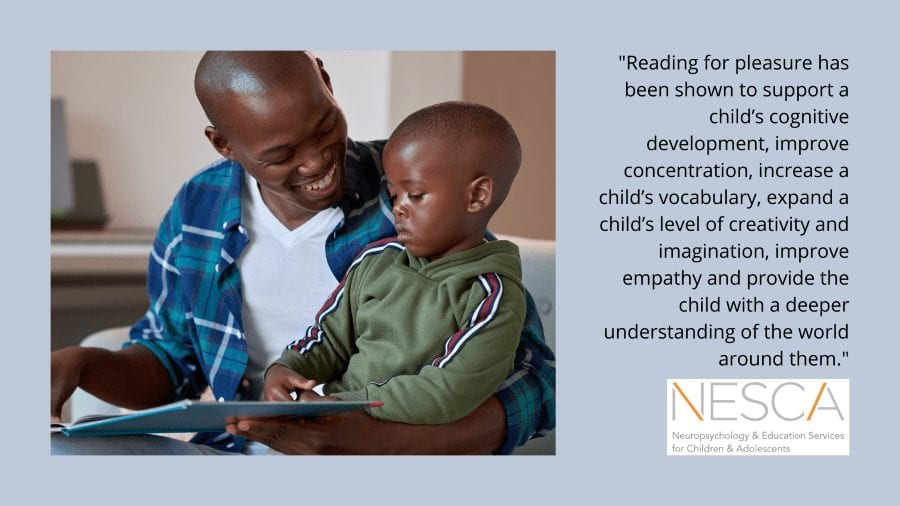
Supporting Your Child’s Reading Development – Even During a Pandemic

By: Alissa Talamo, PhD Clinical Neuropsychologist, NESCA Aside from allowing children to access school instruction, the ability to read provides a child with the opportunity to read for pleasure. Reading for pleasure has been shown to support a child’s cognitive development, improve concentration, increase a child’s vocabulary, expand a child’s level of creativity and imagination, improve empathy and provide the child...


Sensory and Motor Strategies to Support Online Learning

By: Julie Robinson, OT Director of Clinical Services; Occupational Therapist, NESCA For many families, this spring’s experience of remote learning and receiving integrated services was challenging, to say the least. As parents begin to think about their children returning to school this fall questions and concerns arise, not only about regression, but also how they will keep their children engaged...


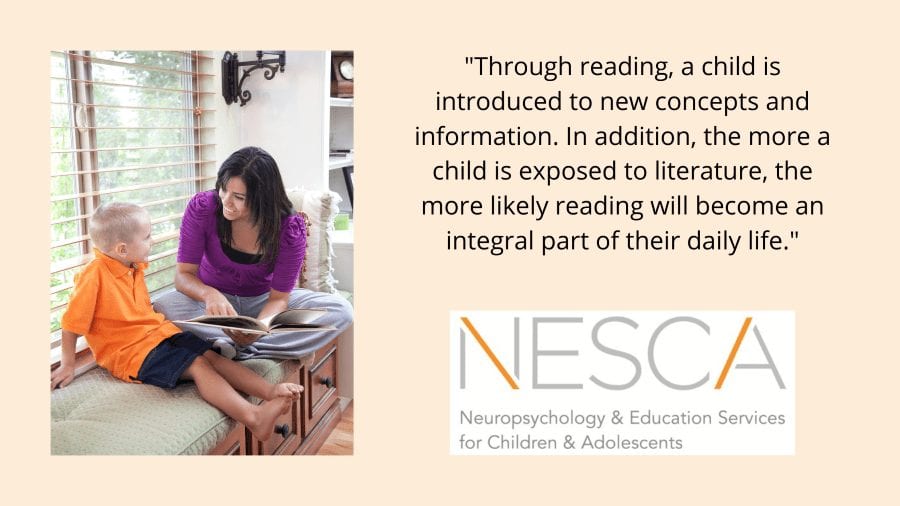
Encouraging Your Child to Read

By: Alissa Talamo, PhD Clinical Neuropsychologist, NESCA According to Sally Shaywitz M.D., (Audrey G. Ratner Professor of Pediatrics-Neurology; Co-Director, Yale Center for Dyslexia & Creativity), dyslexia is highly prevalent, affecting one in five people, and it represents over 80% of all learning disabilities. Even when a child does not meet the criteria for dyslexia, they may be a reluctant reader. Children who...


Transition Goals: What are they and why do they matter in the IEP process?

By: Kelley Challen, Ed.M., CAS Director of Transition Services; Transition Specialist As an evaluator and consultant, I spend a lot of time in team meetings. Usually, I expect to be invited to more of these at the beginning of the school year when teams meet to review assessments or important changes that have occurred during summer months. This year, there...


Adapting Academic Accommodations for Return to Learning

By: Angela Currie, Ph.D. Pediatric Neuropsychologist, Director of Training and New Hampshire Operations, NESCA As students with disabilities return to learning, the accommodations provided through their 504 Plan or Individualized Education Program (IEP) may no longer meet their needs within the structure and limitations of remote learning and/or return to school protocols. For example, when remote learning, teachers are not...


NESCA’s New OT, Speech & Language and Feeding Services

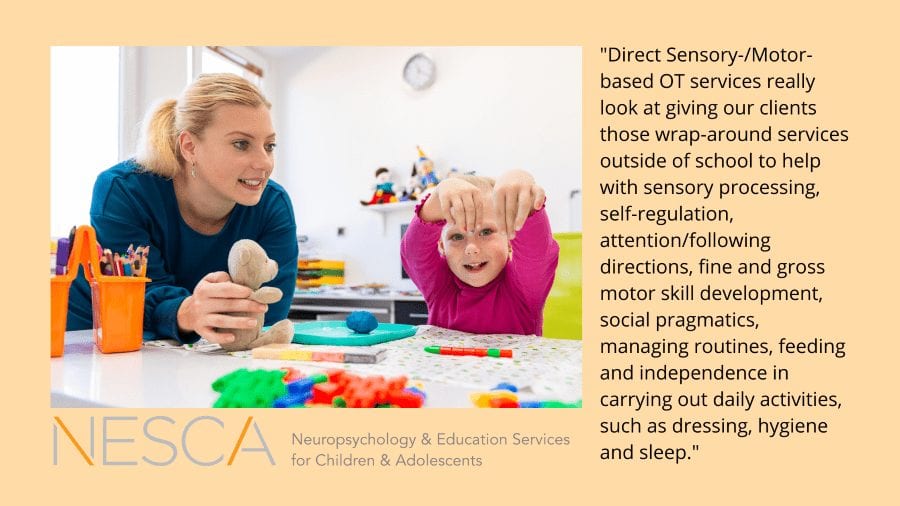
An interview between Sophie Bellenis, OTD, OTR/L, NESCA Occupational Therapist; Real-life Skills Program Manager and Coach, and Julie Robinson, OT, NESCA NESCA just announced that it has expanded its Occupational Therapy (OT) services to include Direct Sensory-/Motor-based OT for its existing and new clients. As you may know, NESCA already offers educational OT assessments and consultation along with Executive Functioning...


Simple Executive Functioning Strategies When The World Is Anything But Simple

By: Moira Creedon, Ph.D.  Pediatric Neuropsychologist, NESCA Whether your children have returned to school full-time, on a hybrid model or fully virtual learning, we are all juggling. Juggling work demands, family demands, household demands and educational demands in a time of remarkable uncertainty. The start of the school year typically brings the smell of fresh school supplies and our best...


Voting Support for Individuals with Disabilities

By: Tabitha Monahan, M.A., CRC Transition Specialist/Counselor General Election season is upon us. The major-party national conventions are over, and the Massachusetts primary results are in. About 20% of eligible voters have a disability, but only 49.3% of individuals with disabilities voted in 2018. And that was an 8.5% increase from previous years among this increasingly important voting bloc. Campaigns, such...


How Do I Prepare My Child for a Neuropsychological Evaluation?

By: Erin Gibbons, Ph.D. Pediatric Neuropsychologist, NESCA Parents often ask us what they should tell their child about their upcoming neuropsychological evaluation, especially when it is their first experience with testing. I advise parents to refer to the neuropsychologist using his or her first name, as the term “doctor” can be scary and raise fears about medical exams. I might...


Sitting Down to Work – Tips for Proper Set-up and Posture

By: Sophie Bellenis, OTD, OTR/L Occupational Therapist; Real-life Skills Program Manager and Coach When working from home, it’s easy to ignore the important things that most people know about maintaining proper posture. The draw of a bed covered in pillows or a cozy nook on the couch can outweigh the rational knowledge that sitting with good posture will help us to...


10 Facts about the Rorschach Inkblot Test

By Renée Marchant, Psy.D. Pediatric Neuropsychologist As an evaluator, I receive a number of questions about the usefulness of the Rorschach Inkblot Test. The following “10 facts” are designed to answer some common questions and also incorporate some new and fresh scientific research findings related to the Rorschach. The Rorschach Inkblot Test is a diagnostic tool that should always be...


Compensatory Services for Transition-aged Individuals

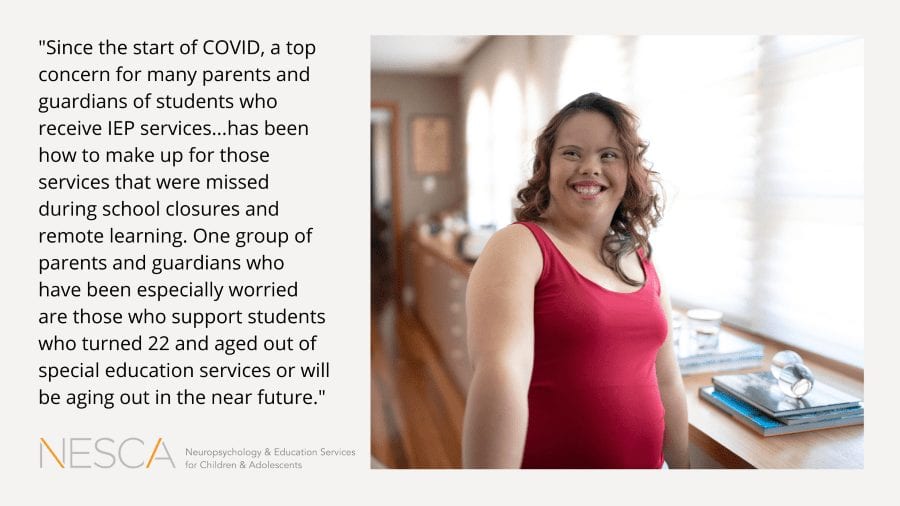
By: Becki Lauzon, M.A., CRC Transition Specialist and Consultant Since the start of COVID, a top concern for many parents and guardians of students who receive IEP services, such as Occupational Therapy, Physical Therapy, Speech and Language, etc., has been how to make up for those services that were missed during school closures and remote learning. One group of parents...


What In-person School Looks Like During COVID-19

By: Tabitha Monahan, M.A., CRC Transition Specialist/Counselor Fall is approaching, and school is starting. As a student, I always knew summer was close to ending when Staples started their “Most Wonderful Time of the Year” commercial. The joy that parents and the community feel as fall approaches and another year of learning begins is understandably absent this year. Many parents,...


Core Strength and Stability: The Physical Foundation

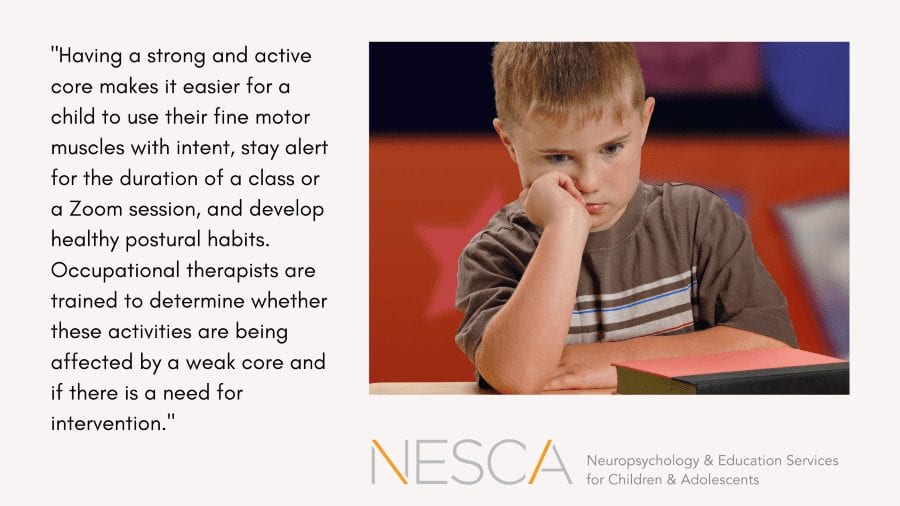
By: Sophie Bellenis, OTD, OTR/L Occupational Therapist; Real-life Skills Program Manager and Coach As our country heads into a period of unique learning, whether through a remote learning experience, a hybrid model or an in-person option with heightened rules and regulations, I find myself focusing on foundation. Foundation, simply defined, means, “the basis upon which something stands or is supported.” Currently,...


The Next Pandemic: Mental Health Issues

By: Ann Helmus, Ph.D. NESCA Founder/Director The return to school, whether remotely or in person, will be a transition that is bound to be stressful for many children and adolescents as well as their parents and teachers. Coming on the heels of five stressful months of lockdown, remote learning, loss of social contact and so many other changes,  children will...


Processing Speed Deficits and College – Part 2 – Finding a Fit

By: Kelley Challen, Ed.M., CAS Director of Transition Services; Transition Specialist In my last blog, Processing Speed Deficits and College – Part 1 – The Dilemma, I discussed specialized instruction for students who have processing speed deficits in high school in comparison to the accommodations process in college. Below is a list of some of the accommodations and instructional modifications...


“Doomscrolling” and Creating Space for Gratitude

By: Cynthia Hess, PsyD Pediatric Neuropsychologist Fellow and Therapist A recent article in the New York Times (July 15, 2020) discusses a newly coined term for a coping strategy that has become pervasive amidst all the uncertainty: “Doomscrolling.” In the article, doomscrolling is defined as, “…the experience of sinking into emotional quicksand while bingeing on doom-and-gloom news.” It has become...


Interoception: Helping Children Develop their “Hidden Sense”

By: Sophie Bellenis, OTD, OTR/L Occupational Therapist; Real-life Skills Program Manager and Coach In our last OT Tuesday, we reviewed the sense of interoception, the ability to perceive information coming from inside the body. From basic human experiences, such as hunger and fatigue, to more complex internal emotions, such as anxiety and fear, interoception allows us to perceive and understand the...


Coronavirus & Social Injustice: A Crisis or an Opportunity? – Part 2

By Dot Lucci, M.Ed., CAGS Director of Consultation and Psychoeducational Services, NESCA Last week in my blog post, I wrote about one’s perspective about the coronavirus as an opportunity or as a crisis. Initially, most everyone thought it was a crisis and we needed to mobilize to fight it. Massachusetts Governor Charlie Baker recognized it as a crisis early on...


Processing Speed Deficits and College – Part 1 – The Dilemma

By: Kelley Challen, Ed.M., CAS Director of Transition Services; Transition Specialist By nature, transition specialists are generalists—professional who support students with a wide range of disabilities in moving toward an even wider range of learning and life outcomes. Working in Massachusetts, with an early background as a guidance counselor in a college preparatory high school, I often support students who...


Interoception: The “Hidden Sense”

By: Sophie Bellenis, OTD, OTR/L Occupational Therapist; Real-life Skills Program Manager and Coach Conventionally, children are taught that there are five different senses, and that these senses help them to experience and understand the world around them. These five senses are sight, sound, smell, taste and touch. Clinically, we refer to these sensory systems as the visual, auditory, olfactory, gustatory and...


Coronavirus & Social Injustice: A Crisis or an Opportunity? – Part 1

By Dot Lucci, M.Ed., CAGS Director of Consultation and Psychoeducational Services, NESCA As our leaders try to handle the crises of today, we can be angry or pleased at their attempt. I know I’ve been both, but yet recognize that they are trying to make tough decisions while taking into consideration many uncontrollable variables. In making these tough decisions (i.e....


There Is No Wrong Decision

By:  Alissa Talamo, Ph.D. Pediatric Neuropsychologist We are living in an unprecedented time. As such, parents are faced with decisions that they have never faced before. For example, families are facing the challenging decision about whether or not to send their children back to school for in-person classes in the middle of the COVID-19 pandemic. Parents have to wrestle with...


What Will Transition Services Look Like in the Fall?

By: Becki Lauzon, M.A., CRC Transition Specialist and Consultant Many parents, educators and students are wondering what school will look like in the fall. This is especially important for those students who are receiving community-based transition services. The Massachusetts Department of Elementary & Secondary Education’s (DESE) Senior Associate Commissioner and State Director of Special Education Russell Johnston released a document...


Positive Coping Strategies for Stress, Anxiety and Trauma During Times of Crisis

By Renée Marchant, Psy.D. Pediatric Neuropsychologist Amidst the global pandemic, children, their caregivers, their teachers and therapists are naturally experiencing heightened stress and anxiety. We are more likely to be sent into “fight, flight, freeze, mode” – the body and brain’s critical survival strategy to prepare and deal with perceived threat. For example, when you see a Grizzly Bear on...


YES! COVID-19 May be Making Basic Daily Tasks More Difficult: The Link Between Executive Function Difficulties and Anxiety/Stress

By: Sophie Bellenis, OTD, OTR/L Occupational Therapist; Real-life Skills Program Manager and Coach As our country continues to adapt to life in the era of COVID-19, it is quite well established that there has been a rise in anxiety and stress among our population. According to the Centers for Disease Control and Prevention (CDC), the mental health effects of the current...


Transition Planning Timelines for Students with Disabilities

By: Kelley Challen, Ed.M., CAS Director of Transition Services; Transition Specialist When families come to NESCA for transition support, a common request is to work with a transition specialist to create a detailed step-by-step transition plan with action items and deadlines that will ensure their child makes a successful transition to postsecondary adulthood. As you can imagine, many hours are...


“Can I Hug You?” – Why the pandemic has us craving closeness

By: Angela Currie, Ph.D. Pediatric Neuropsychologist, NESCA Director of Training and New Hampshire Operations At the end of a testing session last week, my young client and I stood looking at each other through the large glass window of our contactless, adjoined testing rooms. Our hands were newly washed; the fresh scent of antibacterial wipes emitted from the tables; and...


Preparing our Kids to Reenter the Community

By: Erin Gibbons, Ph.D. Pediatric Neuropsychologist, NESCA For many children, new experiences are frightening and anxiety-provoking. Children thrive on routine and predictability; when these get interrupted, it can be hard for them to understand what is happening. As we all know, the last few months have been fraught with unpredictability and change. Now, we are starting to go back to...


School’s Out For Summer

By: Amity Kulis, PsyD Pediatric Neuropsychologist, NESCA With everyone home-schooling these last several months, there has been a push towards academics and getting work done. But now it is summer vacation, and the pressure is off. However, this is a summer like no summer we have ever known. Many families are continuing to spend more time at home, many activities...


From School to Summer – Life Rolls Along in the Era of COVID19

By: Sophie Bellenis, OTD, OTR/L Occupational Therapist; Real-life Skills Program Manager and Coach This past March, families were thrown into the world of remote learning, Zoom classrooms, digital assignments and school at home. With little to no time to prepare, teachers and parents alike have worked tirelessly to provide a sense of routine and academic focus, while handling the social and...


Helpful Tips for Selecting a Transition Program

By: Becki Lauzon, M.A., CRC Transition Specialist and Consultant As a young adult nears the end of their high school career, many parents begin to question whether or not their child is prepared to make the transition to college or career. In Massachusetts, transition planning begins at the age of 14 in order to best prepare individuals for their future....


Let’s Stop Trash-talking Stress and Anxiety-Part 1

By:  Stephanie Monaghan-Blout, Psy.D. Coordinator of Therapy Services; Trauma-informed Therapist Stress and anxiety have gotten a really bad name in our society. Just ask kids – it is a question we sometimes pose to our clients during testing, and the answers we get usually run along the lines of, “Are you kidding? There’s nothing good about stress!”. So, let’s talk...


Multi-sensory Learning: Bringing it into the Home

Sophie Bellenis, OTD, OTR/L By: Occupational Therapist; Real-life Skills Program Manager and Coach In our last OT Tuesday blog, we delved into the topic of multi-sensory learning: what it is, what it looks like in the classroom and what it intends to do. We reviewed the fact that this technique consists of targeting children’s auditory, visual, tactile and kinesthetic systems...


Testing at NESCA during COVID-19

By: Ann Helmus, Ph.D. NESCA Founder/Director I’m sure you can agree, it’s been an interesting time due to the onset of COVID-19. Our worlds, livelihoods and professional lives have been turned upside down. At NESCA, where our entire business revolves around the in-person evaluations, assessments, coaching and treatment of children, adolescents and young adults, much of our “In Real Life...


Making Decisions in Adulthood: Some Options

By: Kelley Challen, Ed.M., CAS Director of Transition Services; Transition Specialist As a transition specialist working with students from middle school through young adulthood, one of the biggest transitions that students make is “turning 18” or when they reach the Age of Majority (i.e., the legal age established by state law at which the person is no longer a minor)...


How to Talk to Your Kids about Racial Inequality and Current Events

By: Cynthia Hess, PsyD Pediatric Neuropsychologist Fellow and Therapist It is old news that parents and children have been experiencing an increased sense of uncertainty and vulnerability due to COVID-19. That vulnerability may be exacerbated by the news of violent protests that were sparked by anger over police brutality against black men and women. News of widespread violence around the...


The Uncertainty, Stress and Anxiety About What School Will Look Like

By: Cynthia Hess, PsyD Pediatric Neuropsychologist Fellow and Therapist Much of adjusting to the world in the midst of a global pandemic has been learning to live with nearly constant uncertainty. Undoubtedly, this pandemic and ensuing uncertainty has caused significant stress for youth and their families. The experience of persistent stress can result in increased vulnerability to anxiety and depression....


Strong Mental Health is So Important During a Pandemic

By Dot Lucci, M.Ed., CAGS Director of Consultation and Psychoeducational Services, NESCA In March, 2020, a poll conducted by the American Psychiatric Association found that more than a third of all Americans (36%) stated that Covid-19 is having a serious impact on their mental health; 59% said it is a having a major impact on their daily lives; 48% are...


Multi-sensory Learning: More than Just a Buzz Word!

By: Sophie Bellenis, OTD, OTR/L Occupational Therapist; Real-life Skills Program Manager and Coach As teaching methods continue to become more and more creative, and learning is being facilitated through interventions that target all types of students, the term “multi-sensory learning” has started to cement its place in the educational lexicon. You may have seen a line in an evaluation, such...


Behavior Happens! But Does It Have To?

By Dot Lucci, M.Ed., CAGS Director of Consultation and Psychoeducational Services, NESCA Recently, I’ve written a few blogs about behavior management and meltdowns and being a behavior detective. I thought I’d end the behavior series with a blog on how to prevent meltdowns from occurring, or at least try to prevent them! Obviously, preventing meltdowns is the best option if...


Bolstering Skills This Summer

By: Becki Lauzon, M.A., CRC Transition Specialist and Consultant With the status of ESY (Extended School Year) services still yet to be determined for the upcoming summer, many parents of transition-aged individuals (14 and up) are wondering what life skills can be worked on this summer, especially if virtual learning continues. When we think of developing transition skills, the first...


There’s an App for That!

By Dot Lucci, M.Ed., CAGS Director of Consultation and Psychoeducational Services, NESCA In this time of “telehealth” and “remote learning” adults, teens and children are being bombarded with virtual platforms such as Zoom, Microsoft Teams, Google Hangouts/Meets and more.  Some teachers and students are being asked to use Google Classroom, Blackboard and other classroom-based platforms for the first time. I...


Visual Motor Integration Deep Dive – Part 2

  By: Sophie Bellenis, OTD, OTR/L Occupational Therapist; Real-life Skills Program Manager and Coach Last week’s blog taught us the nuts and bolts of Visual Motor Integration. Let’s jump into the what VMI really means for students who struggle with VMI. Research has shown a statistically significant correlation between performance on visual motor integration assessments and teachers’ assessments of early...


Becoming a Behavior Detective

By Dot Lucci, M.Ed., CAGS Director of Consultation and Psychoeducational Services, NESCA Behavior = Communication Behavior is everywhere you look. All behavior is adaptive and purposeful whether “appropriate or inappropriate,” “expected or unexpected,” or “regulated or not.” Have you ever heard of the phrase, “Behavior = Communication?” It is often used to help us think about behavior as a meaningful...


Meltdown Analysis — Part 2

By Dot Lucci, M.Ed., CAGS Director of Consultation and Psychoeducational Services, NESCA As discussed in last week’s blog, Meltdowns Happen, all children meltdown. Adults meltdown, too. Losing control can take many forms. It is a part of human nature unless we deliberately work on “controlling the beast” that’s lurking inside of us when our system gets taxed. When children are...


Preparing for the Transition from Special Education to Adult Services

By: Becki Lauzon, M.A., CRC Transition Specialist and Consultant As many parents, educators and young adults know, the transition from special education services to adult services is an overwhelming and scary time. I recently gave a presentation about breaking down the referral process for adult services, as well as highlighting many types of services that are available once a student turns...


Visual Motor Integration Deep Dive – Part 1

By: Sophie Bellenis, OTD, OTR/L Occupational Therapist; Real-life Skills Program Manager and Coach If your child is currently receiving occupational therapy services in either a sensory clinic or a school-based setting, it is likely that you have heard the phrase “visual motor integration (VMI).” It has possibly been described as the ability to “see something and then recreate it with...


The Therapeutic Great Outdoors—Part 2

By: Sophie Bellenis, OTD, OTR/L Occupational Therapist; Real-life Skills Program Manager and Coach In last week’s blog, we provided the first five ideas on how to teach and build OT skills by getting outdoors. This week, we bring the next installment of ideas to help build skills while also providing a break from being cooped up together. Take it a...


Life Skills for College to Work on Now – Part 2

By: Kelley Challen, Ed.M., CAS Director of Transition Services; Transition Specialist In Massachusetts, we are more than five weeks into home-based learning and looking toward another two months (or more) of schools and childcare facilities being closed. Unfortunately, this is taking a particularly large social and emotional toll on our teenagers and young adults. One strategy for coping with current...


Meltdowns Happen

By Dot Lucci, M.Ed., CAGS Director of Consultation and Psychoeducational Services, NESCA When we think of the word meltdown, we may think of the economy or stock market, glaciers, nuclear meltdowns or even volcanoes erupting. These are all examples of things collapsing from being over-stressed, overheating, a major disruption to a system or an internal collapse. Using the word meltdown...


The Therapeutic Great Outdoors—Part 1

By: Sophie Bellenis, OTD, OTR/L Occupational Therapist; Real-life Skills Program Manager and Coach Aside from a spring snowfall this week, it looks like springtime may have truly arrived here in New England. Flowers are popping up on trees, the peepers and morning birds are singing and the warm sun is finally convincing most of us to leave the coats and...


Good Ideas for Dogs are Good for People, Too

By Dot Lucci, M.Ed., CAGS Director of Consultation and Psychoeducational Services, NESCA Play Every Day! — Play can promote calmness and reduce anxiety. This is true for adults and kids. Play Is Learning — Reflect after play by creating and asking questions. Did you learn anything new? What surprised you? How did you feel before you played? How you feel...


Life Skills for College to Work on Now – Part 1

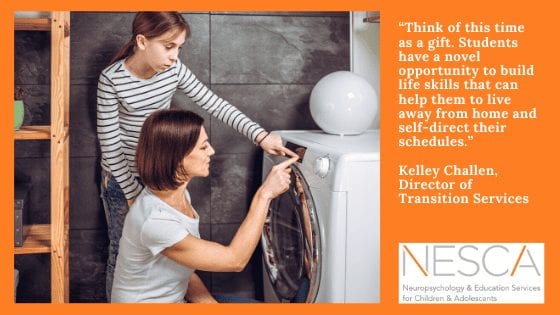
By: Kelley Challen, Ed.M., CAS Director of Transition Services; Transition Specialist As a transition specialist working with students who have the cognitive and academic potential for college but have sometimes missed opportunities to develop life skills while keeping up with rigorous academic and extracurricular schedules, I am encouraging families to think of this time as a gift. Students, especially those...


Daily Journaling While Social Distancing

By Dot Lucci, M.Ed., CAGS Director of Consultation and Psychoeducational Services, NESCA This is such a unique time that we are living in, but one day it will be a distant memory. Get a special journal book, make it from scratch or create one online. It will give you something to look back on and remember how you achieved something...


Transition Planning: “Remote” Work-based Learning Experiences

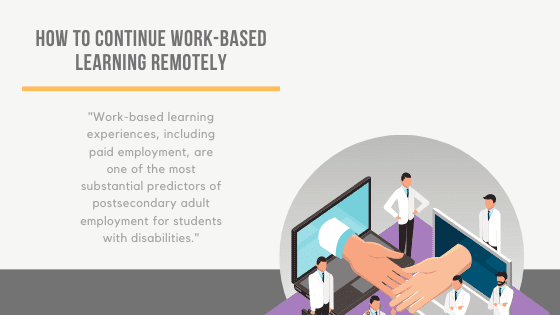
By: Kelley Challen, Ed.M., CAS Director of Transition Services; Transition Specialist In the past three weeks, I have consulted with countless parents of high school students who are worried about how school closures and social distancing are impacting their child’s ability to gain need work experience during high school. Prior to March, I had been working with their teens to...


Helping Children Transition from One Activity to the Next

By: Sophie Bellenis, OTD, OTR/L Occupational Therapist; Real-life Skills Program Manager and Coach Here at NESCA we often talk about Transition as the process by which an adolescent or young adult develops the necessary skills to function independently in the adult world (Big “T”), but many younger students are working to master much smaller transitions throughout the day (little “t’s”)....


Why “Find something to do” Doesn’t Work – Teaching Independent Play Skills during Quarantine

  By: Angela Currie, Ph.D. Pediatric Neuropsychologist, NESCA Director of Training and New Hampshire Operations Nowadays, children’s schedules tend to be highly regimented. For many, free play has been replaced by extracurricular activities, sports and planned playdates. Recess hours have also been reduced in favor of structured learning activities. The reduction in free play throughout the day can delay or...


Skill Highlight: Touch Typing!

By: Sophie Bellenis, OTD, OTR/L Occupational Therapist; Real-life Skills Program Manager and Coach As you are sitting at home with your child and working to find a reasonable balance of academics, physical movement, chores, social time and relaxation, one specific skill to consider targeting is touch typing or keyboarding. As we move further and further into the digital age and,...


Tips for Structuring Schedules with Transition Activities

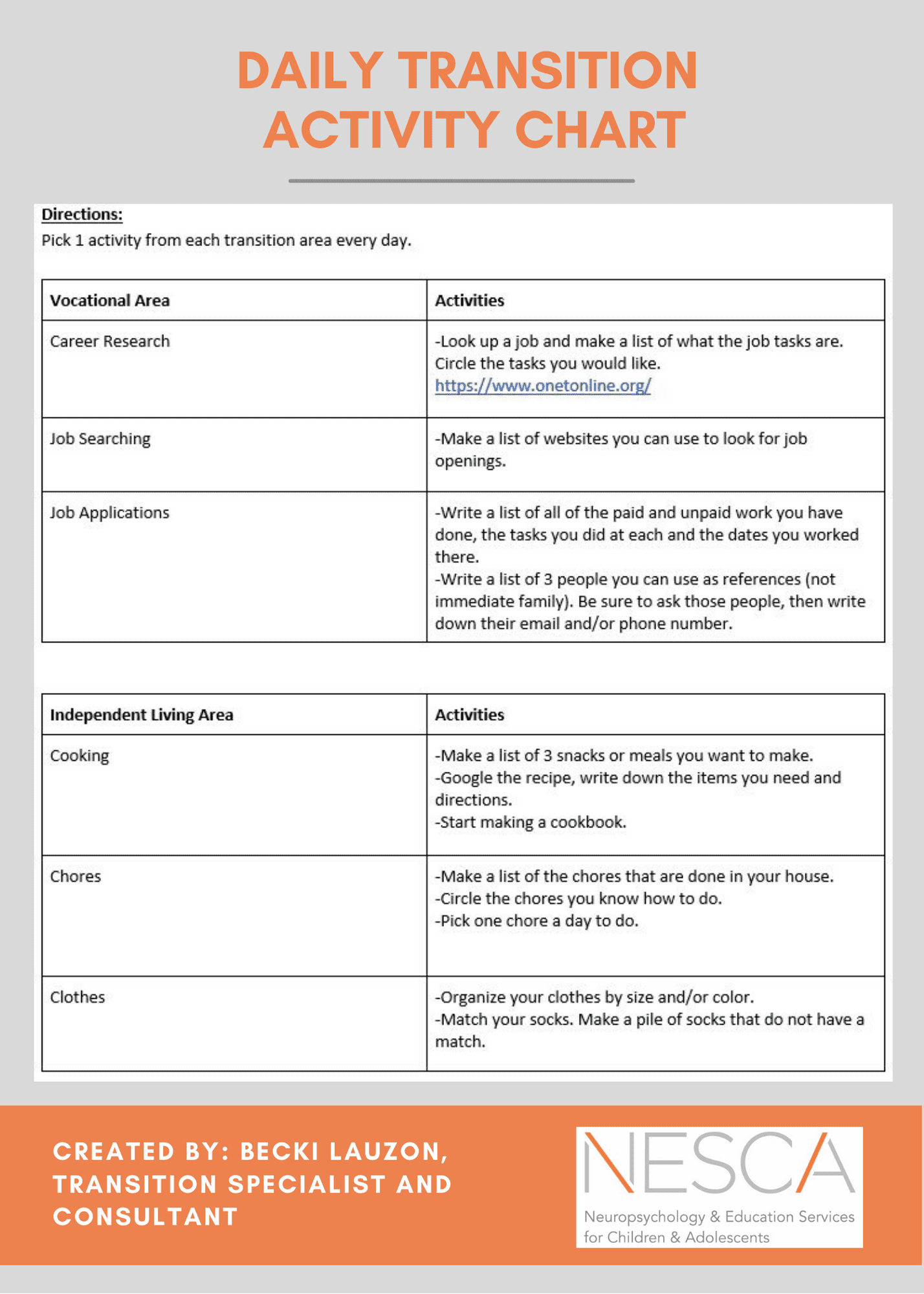
By: Becki Lauzon, M.A., CRC Transition Specialist and Consultant There are lots of helpful resources, including articles, blogs, charts, etc. being shared about how to structure your time while you are at home and continue to work on maintaining transition skills. While much of the information is helpful and informative, it can also become overwhelming. Many people have asked how to...


Helping Your Anxious Child through COVID-19

By Yvonne M. Asher, Ph.D.  Pediatric Neuropsychologist A recent New York Times article by Jessica Grose discusses ways to support your child, specifically helping them to feel less anxious, during the COVID-19 situation. Their “top 4” suggestions are great ones – validate their feelings, manage your own anxiety, aim for some kind of predictable routine and try mindfulness or progressive...


An OT’s Guide to Home Learning: Board Games and Puzzles

By: Sophie Bellenis, OTD, OTR/L Occupational Therapist; Real-life Skills Program Manager and Coach As social distancing recommendations, stay-at-home orders and shelter-in-place mandates continue to keep families confined to the home, parents are quickly being asked to take on the roles of teacher, therapist, warden, work-from-home professional, best friend and more. For parents of children with special needs and learning differences,...


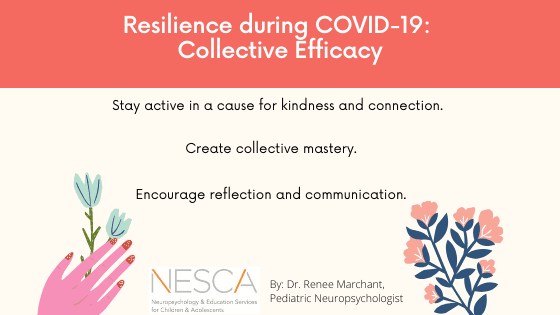
Resilience during COVID-19: Collective Efficacy

By Renée Marchant, Psy.D. Pediatric Neuropsychologist There is an array of research-proven factors shown to increase psychological and physiological resilience or “bounce-back” from stressful experiences, such as maintaining a social network and practicing healthy coping skills when in distress. One important factor is self-efficacy. Self-efficacy is distinct from self-esteem. Self-esteem is a judgement of self-worth whereas self-efficacy is a judgement...


But First, Settle into the New Normal

By Dot Lucci, M.Ed., CAGS Director of Consultation and Psychoeducational Services, NESCA Let’s face it, parents have a big job to do when life is “normal,” never mind when we are living in this new normal. Parents are being bombarded with information from every corner of your life—even all of us at NESCA are blogging every day to help parents...


Maintaining Transition Skills at Home

By: Becki Lauzon, M.A., CRC Transition Specialist and Consultant Transition skills are vital for many students, especially those who are close to turning 22 and aging out of the public education system or in their senior year of high school. Below are some free tools and suggestions, based on DESE’s secondary-transition model, regarding how students can continue to work on...


Now is a Great Time to Practice Self-compassion

By: Cynthia Hess, PsyD Pediatric Neuropsychologist Fellow In this new era of social distancing, and where homeschooling has gone from being an exception to a new way of life, many are feeling confused, overwhelmed and wondering what to do next. Many parents have found themselves adrift in a sea of uncertainty without a compass. In her New York Times article...


Five Tips for Promoting Fine Motor Development in the Home!

By: Sophie Bellenis, OTD, OTR/L Occupational Therapist; Real-life Skills Program Manager and Coach Writing on a vertical surface is a great way to promote proper hand/wrist positioning and fine motor growth – try taping paper to an easel or to the wall and allowing them to try writing on this plane. Skip the fat pencils for our little learners. While...


Remote Real-life Skills Coaching: How Does it Work?

By: Sophie Bellenis, OTD, OTR/L Occupational Therapist; Real-life Skills Program Manager and Coach What is life skills coaching? Coaching services in general aim to target functional life skills and help our children and adolescents to slowly build the ability to independent. While some of these skills, such as taking Uber, riding the T, or ordering in a restaurant, cannot be...


We’re in this together, but do we have to be together all the time?

By Dot Lucci, M.Ed., CAGS Director of Consultation and Psychoeducational Services, NESCA Everyone being home at once is now the “new normal,” and, let’s face it, nothing feels normal about the situation we are in now. We are in uncharted waters and need to create life boats for all of us to use when the going gets tough. No matter...


7 Ways to Build Work-readiness from Your Couch

By: Kelley Challen, Ed.M., CAS Director of Transition Services; Transition Specialist With schools across the country closed, special education and transition services are on hold for millions of young people. Fortunately, there are options for teenagers and young adults of all abilities to build important career planning, work readiness and even paid employment experience from home. Here are some suggestions...


School-based Occupational Therapy at Home

By: Sophie Bellenis, OTD, OTR/L Occupational Therapist; Real-life Skills Program Manager and Coach While school districts and government officials work to plan for the current “new normal,” no concrete decisions have been made about the delivery of special education and provider services. As parents take on the huge task of educating within the home, it is important to consider how...


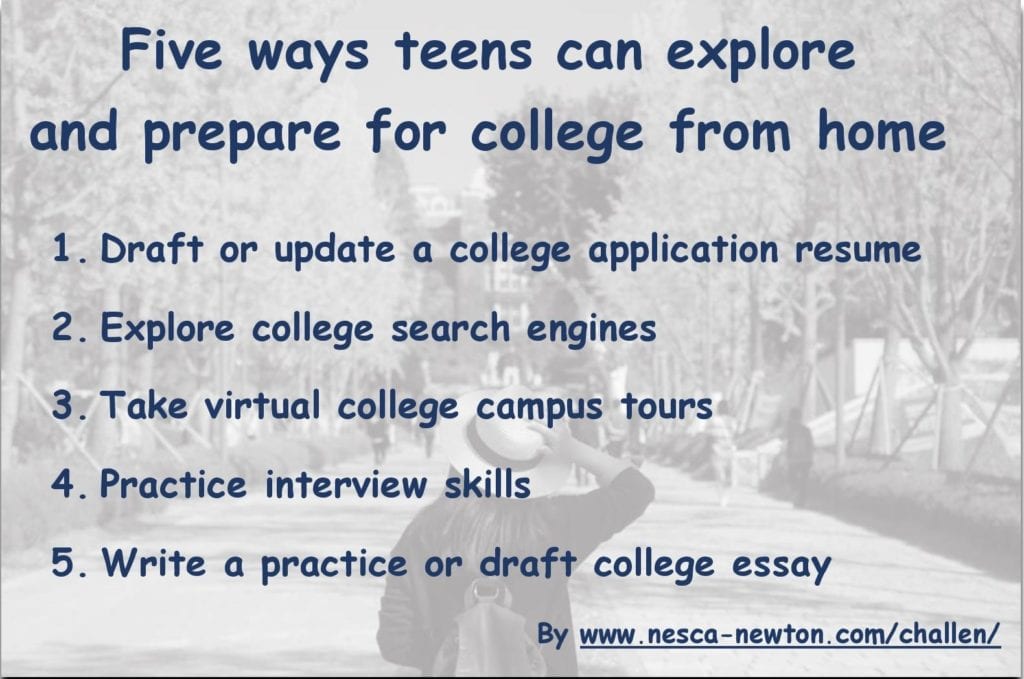
Planning and Preparing for College from Home during Covid-19

By: Kelley Challen, Ed.M., CAS Director of Transition Services; Transition Specialist While college in the United States is looking quite different for student’s currently enrolled, many (but not all) high school juniors across the country participated in SAT testing yesterday morning in preparation for their college application process. For teenagers–who have natural difficulties thinking ahead and anticipating consequences–being stuck at...


Managing Stress in Stressful Times

By: Cynthia Hess, PsyD Pediatric Neuropsychologist Fellow News of the novel Coronavirus (COVID-19) is everywhere. The outbreak of the Coronavirus, or any critical event of this magnitude, can be stressful for people and communities. For some, the anxiety can be overwhelming. Children may also be experiencing stress and anxiety as news spreads through classrooms and on the playground. Furthermore, they...


Making the Most of COVID-19 School Closures

By: Sophie Bellenis, OTD, OTR/L Occupational Therapist; Real-life Skills Program Manager and Coach COVID-19 was recently declared a pandemic by the World Health Organization (WHO), and it is quickly becoming a pervasive force that we are all attuned to. As our healthcare providers, scientists and officials focus their energy on social distancing recommendations and public health measures, it seems as...


The Enemy of the Good

By Jason McCormick, Psy.D. Pediatric Neuropsychologist As a neuropsychologist who has primarily focused on assessment of middle school, high school and college students, I have worked with many children, adolescents and young adults plagued with perfectionism. On the surface level, perfectionism is defined as a refusal to accept any standard short of perfection. Digging deeper, at the roots of perfection...


Neurodevelopmental Evaluations – Where and When to Start

**Creating Roadmaps for the Lifespan: Preschool Neurodevelopmental Evaluations to Life After High School** NESCA Pediatric Neuropsychologist Dr. Erin Gibbons will be presenting on neurodevelopmental and neuropsychological evaluations in a free educational workshop at NESCA’s Plainville, MA office on Monday, March 9 from 6:30 – 8:00 PM. NESCA Transition Specialist Becki Lauzon will be co-presenting to address the transition process/how to...