NESCA's Blog

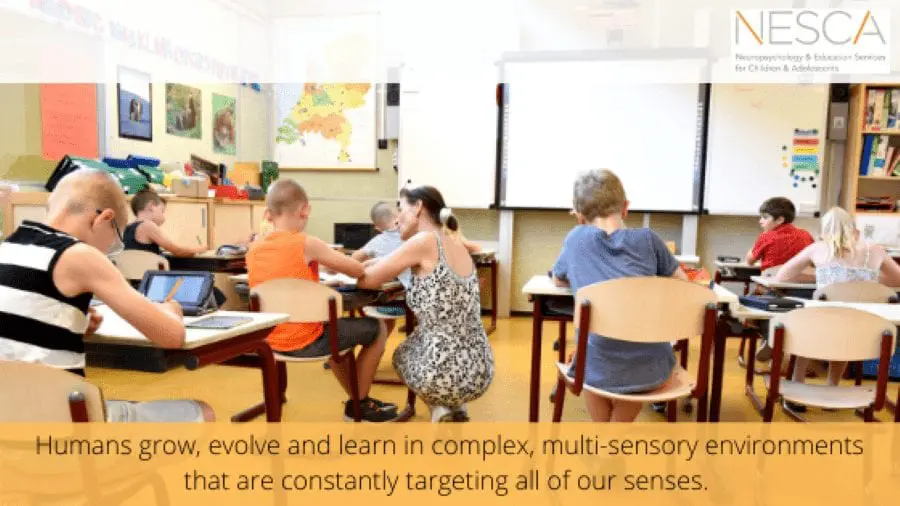
Multi-sensory Learning: More than Just a Buzz Word!

By: Sophie Bellenis, OTD, OTR/L Occupational Therapist; Real-life Skills Program Manager and Coach As teaching methods continue to become more and more creative, and learning is being facilitated through interventions that target all types of students, the term “multi-sensory learning” has started to cement its place in the educational lexicon. You may have seen a line in an evaluation, such...

Behavior Happens! But Does It Have To?

By Dot Lucci, M.Ed., CAGS Director of Consultation and Psychoeducational Services, NESCA Recently, I’ve written a few blogs about behavior management and meltdowns and being a behavior detective. I thought I’d end the behavior series with a blog on how to prevent meltdowns from occurring, or at least try to prevent them! Obviously, preventing meltdowns is the best option if...


There’s an App for That!

By Dot Lucci, M.Ed., CAGS Director of Consultation and Psychoeducational Services, NESCA In this time of “telehealth” and “remote learning” adults, teens and children are being bombarded with virtual platforms such as Zoom, Microsoft Teams, Google Hangouts/Meets and more.  Some teachers and students are being asked to use Google Classroom, Blackboard and other classroom-based platforms for the first time. I...


Visual Motor Integration Deep Dive – Part 2

  By: Sophie Bellenis, OTD, OTR/L Occupational Therapist; Real-life Skills Program Manager and Coach Last week’s blog taught us the nuts and bolts of Visual Motor Integration. Let’s jump into the what VMI really means for students who struggle with VMI. Research has shown a statistically significant correlation between performance on visual motor integration assessments and teachers’ assessments of early...


Becoming a Behavior Detective

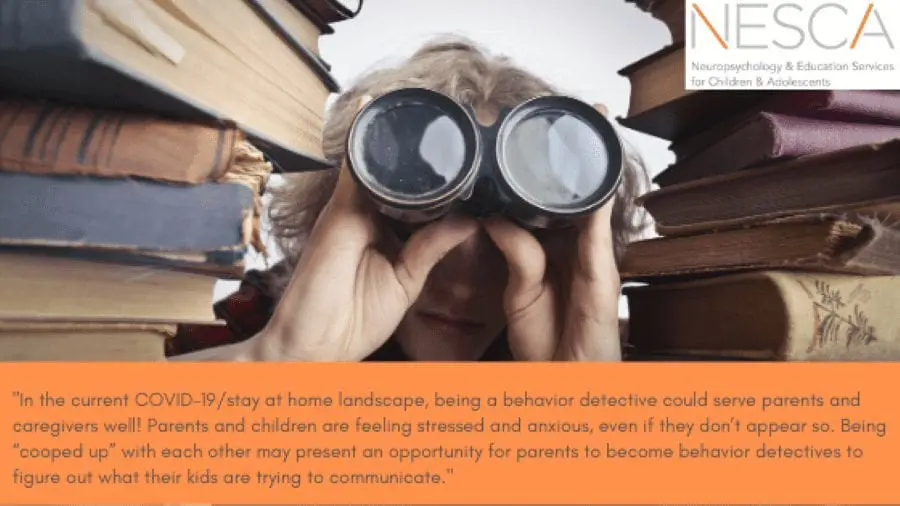
By Dot Lucci, M.Ed., CAGS Director of Consultation and Psychoeducational Services, NESCA Behavior = Communication Behavior is everywhere you look. All behavior is adaptive and purposeful whether “appropriate or inappropriate,” “expected or unexpected,” or “regulated or not.” Have you ever heard of the phrase, “Behavior = Communication?” It is often used to help us think about behavior as a meaningful...


Visual Motor Integration Deep Dive – Part 1

By: Sophie Bellenis, OTD, OTR/L Occupational Therapist; Real-life Skills Program Manager and Coach If your child is currently receiving occupational therapy services in either a sensory clinic or a school-based setting, it is likely that you have heard the phrase “visual motor integration (VMI).” It has possibly been described as the ability to “see something and then recreate it with...


Meltdown Analysis — Part 2

By Dot Lucci, M.Ed., CAGS Director of Consultation and Psychoeducational Services, NESCA As discussed in last week’s blog, Meltdowns Happen, all children meltdown. Adults meltdown, too. Losing control can take many forms. It is a part of human nature unless we deliberately work on “controlling the beast” that’s lurking inside of us when our system gets taxed. When children are...



The Therapeutic Great Outdoors—Part 2

By: Sophie Bellenis, OTD, OTR/L Occupational Therapist; Real-life Skills Program Manager and Coach In last week’s blog, we provided the first five ideas on how to teach and build OT skills by getting outdoors. This week, we bring the next installment of ideas to help build skills while also providing a break from being cooped up together. Take it a...



Meltdowns Happen

By Dot Lucci, M.Ed., CAGS Director of Consultation and Psychoeducational Services, NESCA When we think of the word meltdown, we may think of the economy or stock market, glaciers, nuclear meltdowns or even volcanoes erupting. These are all examples of things collapsing from being over-stressed, overheating, a major disruption to a system or an internal collapse. Using the word meltdown...



Life Skills for College to Work on Now – Part 2

By: Kelley Challen, Ed.M., CAS Director of Transition Services; Transition Specialist In Massachusetts, we are more than five weeks into home-based learning and looking toward another two months (or more) of schools and childcare facilities being closed. Unfortunately, this is taking a particularly large social and emotional toll on our teenagers and young adults. One strategy for coping with current...


The Therapeutic Great Outdoors—Part 1

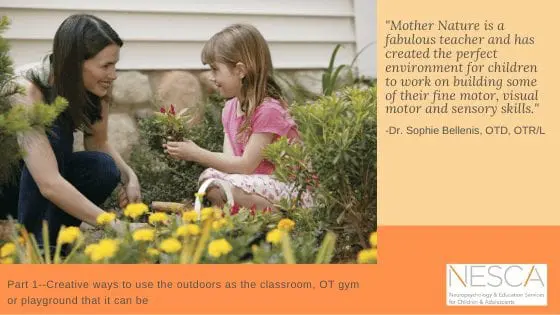
By: Sophie Bellenis, OTD, OTR/L Occupational Therapist; Real-life Skills Program Manager and Coach Aside from a spring snowfall this week, it looks like springtime may have truly arrived here in New England. Flowers are popping up on trees, the peepers and morning birds are singing and the warm sun is finally convincing most of us to leave the coats and...


Good Ideas for Dogs are Good for People, Too

By Dot Lucci, M.Ed., CAGS Director of Consultation and Psychoeducational Services, NESCA Play Every Day! — Play can promote calmness and reduce anxiety. This is true for adults and kids. Play Is Learning — Reflect after play by creating and asking questions. Did you learn anything new? What surprised you? How did you feel before you played? How you feel...


Life Skills for College to Work on Now – Part 1

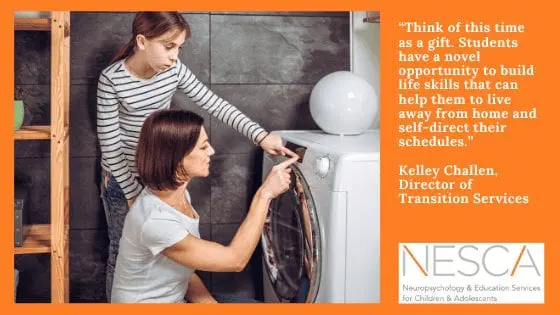
By: Kelley Challen, Ed.M., CAS Director of Transition Services; Transition Specialist As a transition specialist working with students who have the cognitive and academic potential for college but have sometimes missed opportunities to develop life skills while keeping up with rigorous academic and extracurricular schedules, I am encouraging families to think of this time as a gift. Students, especially those...


Helping Children Transition from One Activity to the Next

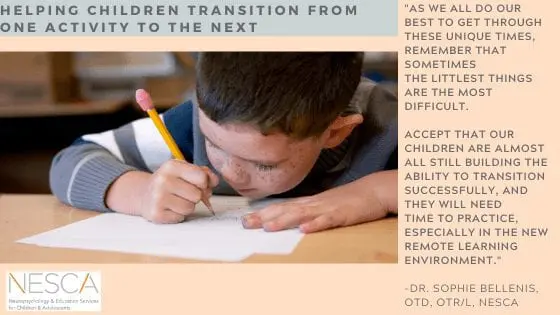
By: Sophie Bellenis, OTD, OTR/L Occupational Therapist; Real-life Skills Program Manager and Coach Here at NESCA we often talk about Transition as the process by which an adolescent or young adult develops the necessary skills to function independently in the adult world (Big “T”), but many younger students are working to master much smaller transitions throughout the day (little “t’s”)....


Skill Highlight: Touch Typing!

By: Sophie Bellenis, OTD, OTR/L Occupational Therapist; Real-life Skills Program Manager and Coach As you are sitting at home with your child and working to find a reasonable balance of academics, physical movement, chores, social time and relaxation, one specific skill to consider targeting is touch typing or keyboarding. As we move further and further into the digital age and,...


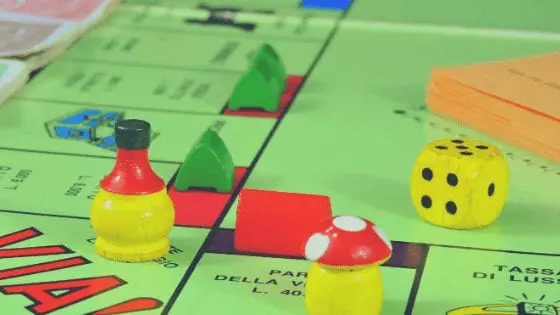
An OT’s Guide to Home Learning: Board Games and Puzzles

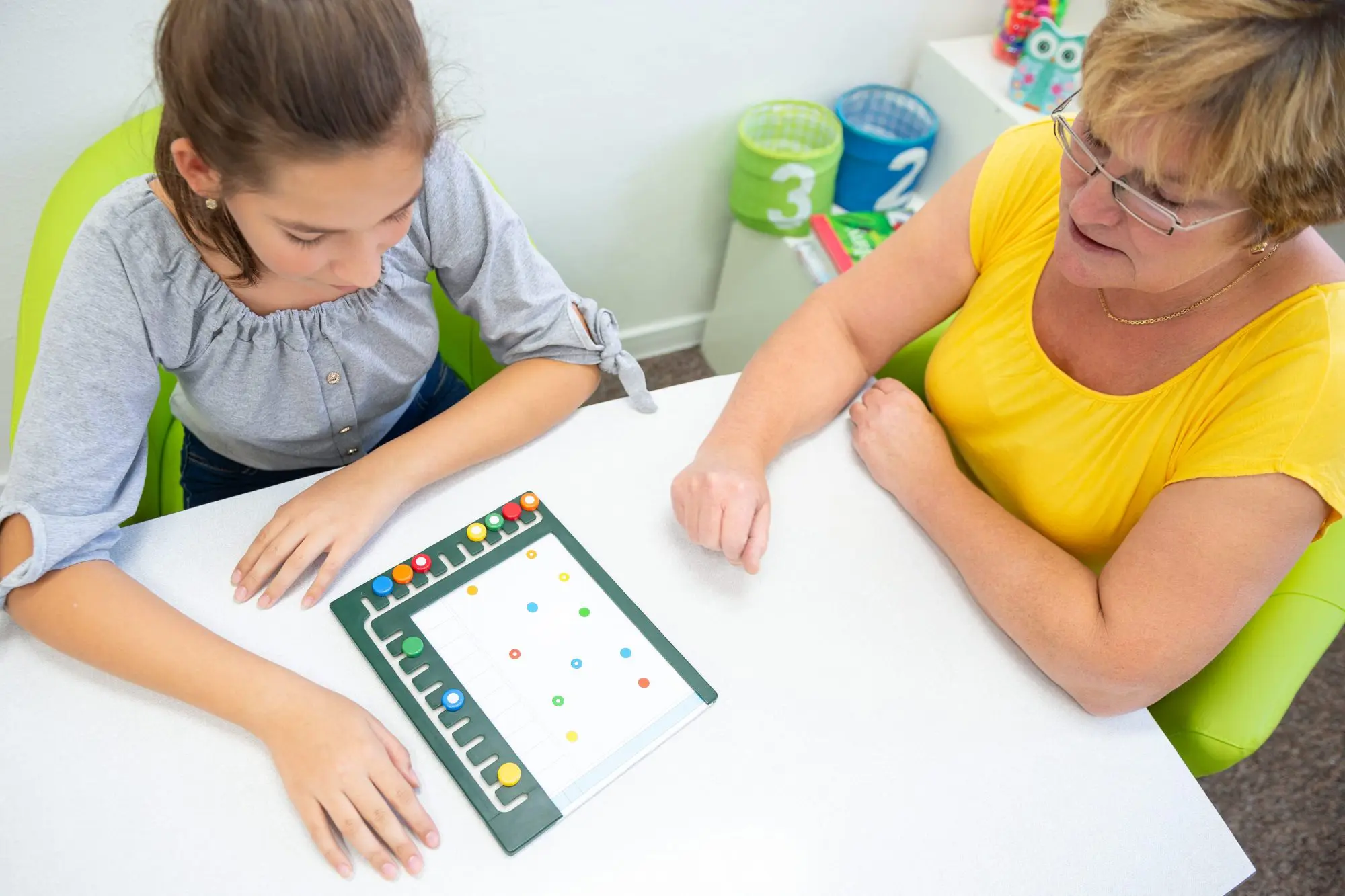
By: Sophie Bellenis, OTD, OTR/L Occupational Therapist; Real-life Skills Program Manager and Coach As social distancing recommendations, stay-at-home orders and shelter-in-place mandates continue to keep families confined to the home, parents are quickly being asked to take on the roles of teacher, therapist, warden, work-from-home professional, best friend and more. For parents of children with special needs and learning differences,...


Five Tips for Promoting Fine Motor Development in the Home!

By: Sophie Bellenis, OTD, OTR/L Occupational Therapist; Real-life Skills Program Manager and Coach Writing on a vertical surface is a great way to promote proper hand/wrist positioning and fine motor growth – try taping paper to an easel or to the wall and allowing them to try writing on this plane. Skip the fat pencils for our little learners. While...


7 Ways to Build Work-readiness from Your Couch

By: Kelley Challen, Ed.M., CAS Director of Transition Services; Transition Specialist With schools across the country closed, special education and transition services are on hold for millions of young people. Fortunately, there are options for teenagers and young adults of all abilities to build important career planning, work readiness and even paid employment experience from home. Here are some suggestions...


When Grandparents Become Parents Again

By Yvonne M. Asher, Ph.D.  Pediatric Neuropsychologist Grandparents can hold a special place for any child. For some, though, grandparents play a central role in their day-to-day lives. When grandparents raise a child, it is often related to parental challenges, tragic circumstances or government intervention. This brings inherent, understandable stressors for grandparents. Additionally, grandparents face the more typical challenges of...


How to Help Children Grieve

By: Angela Currie, Ph.D. Pediatric Neuropsychologist, NH Director, NESCA and Cynthia Hess, Psy.D. Pediatric Neuropsychologist Fellow, NESCA Oftentimes, the loss of a celebrity may be a child or adolescent’s first experience with loss or grief. Many this week who grew up admiring the talents of Kobe Bryant are unfortunately finding themselves in this group. Even when a child has never...


Transition Planning at IEP Team Meetings – The Good, The Fun and The Beautiful

By: Kelley Challen, Ed.M., CAS Director of Transition Services; Transition Specialist Transition planning is a complicated process for schools, families and related service professionals. It is not something that can be done well without key ingredients, such as open minds, collaboration and creative brain power… not to mention time. But when good transition planning happens in the context of a...


Why We Should Weed Out Lawnmower Parenting

By:  Alissa Talamo, Ph.D. Pediatric Neuropsychologist There are many parenting styles and trends…helicopter parents, attachment parents, free range parents, and now…the lawnmower parent. All of these parenting styles come from loving, well-meaning parents who want to do what is best for their children and protect them from harm. However, the lawnmower parent, the newest iteration of such approaches, often prevents...


Mindfulness: It’s Not Just for Grown-ups

By: Cynthia Hess, PsyD Pediatric Neuropsychologist Fellow There has been increasing interest in intervention strategies that target self-regulation in childhood. Self-regulation is the process through which the systems of emotion, attention and behavior are controlled in response to a situation, stimulus or demand. It develops rapidly in the early years of life. Self-regulation is necessary for social development because it supports...


When is it Actually Bullying?

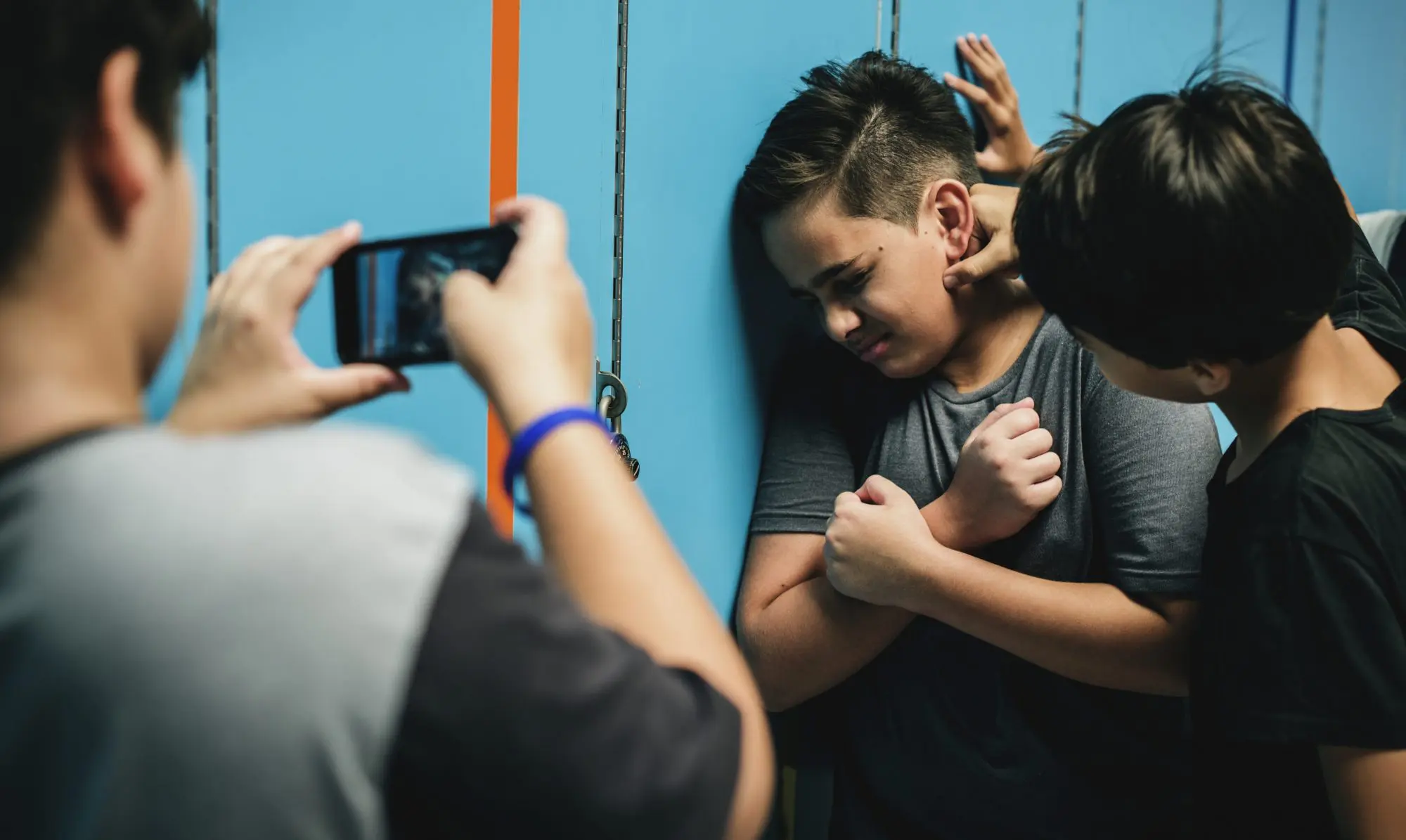
By Yvonne M. Asher, Ph.D.  Pediatric Neuropsychologist Autumn holds excitement for many students – heading back to school to see old friends, meet new teachers and learn new skills. However, for some, a new school year holds more apprehension than enthusiasm. Students worry that their teacher will be mean, their math homework will be hard or that their recess time cut...


What is a Nonverbal Learning Disability?

By: Angela Currie, Ph.D. Pediatric Neuropsychologist, NH Director, NESCA There is often lack of awareness or confusion about what a Nonverbal Learning Disability (NLD or NVLD) is. While NLD has been long-discussed in the neuropsychological and educational world, it has not been formally recognized by the medical field due to variability within individual profiles and lack of clarity on its...


Increasing Reading Success: Early Identification of Reading Challenges

  By:  Alissa Talamo, Ph.D. Pediatric Neuropsychologist I recently attended the International Dyslexia Association Conference in Atlanta, GA (dyslexiaida.org). Among the conference attendees were researchers, teachers, speech-language pathologists, psychologists, and parents of children with dyslexia. One recurring key point was the importance of early identification of reading difficulties, as early provision of appropriate interventions and services leads to better outcomes....


Introduction to Acupuncture with Licensed Acupuncturist Meghan Meade

  By: Meghan Meade, L.Ac, MAOM, MS PREP, CYT Licensed Acupuncturist, NESCA Acupuncture is one of eight branches of Chinese Medicine that dates back over 3,000 years and involves the insertion of hair-thin needles into the body to provoke a healing response. The body registers needling as a microinjury to which it responds by summoning the immune, nervous and endocrine...


What Does Autism Look Like? Exploring the Differences among Girls and Boys

  By: Erin Gibbons, Ph.D. Pediatric Neuropsychologist, NESCA In 2018, the Centers for Disease Control and Prevention (CDC) determined that approximately 1 in 59 children is diagnosed with Autism Spectrum Disorder (ASD). Boys are still four times more likely be diagnosed with ASD; however, research indicates that the diagnosis is often missed in girls, especially those who have average intelligence...


Transition Planning for Adulthood—It Starts at Birth

  By: Kelley Challen, Ed.M., CAS Director of Transition Services; Transition Specialist There are many transitions throughout a person’s life, but as a transition specialist working at a pediatric neuropsychology practice, my focus is most often on helping students who have struggled with learning, social and/or emotional difficulties to plan for and successfully navigate the transition from secondary school to whatever...


Identifying and Supporting Twice-exceptional (2e) Children

By: Alissa Talamo, PhD Clinical Neuropsychologist, NESCA Rodney gets decent grades and achieves close to or at grade level in all of his district assessments. When concerns about his reading achievement were raised and an evaluation was conducted, it was found that his IQ is well above average, superior in some areas, but his reading decoding scores are below the...


Why are they called “Soft” Skills?

By Kathleen Pignone, M.Ed., CRC Transition Specialist If they are soft, why are they so crucial in this hard, cruel world? As a transition specialist, I meet with young adults and their parents on a daily basis. All parents want to know what is that missing piece for child to really succeed after high school? What should my priorities be? Is the...


Visual Skill and Academic Success – Looking Past 20/20 Vision

By: Sophie Bellenis, OTD, OTR/L Occupational Therapist; Community-Based Skills Coach When a school nurse pulls a child into his or her office to complete a basic eye screening, he or she may write, “20/20 vision in both eyes. No visual concerns.” This child has successfully looked at an eye chart and read the letters; demonstrated the ability to look straight ahead,...


State Dyslexia Laws – What do they aim to do and how can we aid their success?

  By: Angela Currie, Ph.D. Pediatric Neuropsychologist, NH Director, NESCA While in 2013 there were only 22 states that had laws regarding dyslexia, as of March 2018, 42 states have dyslexia-specific laws, and as discussed in the article Dyslexia Laws in the USA: A 2018 Update by Martha Youman and Nancy Mather, 33 legislative bills related to dyslexia were introduced...


Addressing Anxiety through the IEP Process

By: Erin Gibbons, Ph.D. Pediatric Neuropsychologist, NESCA Anxiety disorders are becoming more and more common among children and adolescents. Recent data from the National Institute of Mental Health (NIMH) reported that 31.9% of adolescents between 13-19 have an identified anxiety disorder. Although fewer statistics are available, it is clear that students who have a developmental, learning, or attention disorder are at...


Why does my neuropsychologist need that? What do the tests measure and why is previous testing important?

  By:  Stephanie Monaghan-Blout, Psy.D. Pediatric Neuropsychologist When a family books an intake for neuropsychological evaluation, they are typically asked to complete a few pieces of paperwork and to bring previous testing and other educational documents such as an Individualized Education Program (IEP) for their intake appointment. Despite this request, many parents will come to the intake session with empty...


Enjoying the Holidays with Sensory Needs

  By: Sophie Bellenis, OTD, OTR/L  NESCA Occupational Therapist; Community-Based Skills Coach School vacation! Bright lights! Snow! Holiday cards on the wall! Bells a’ringing! For many of us, the holiday season is an exciting, family filled occasion that brings people together to celebrate yearly traditions.  However, for some of our children with sensory needs, the season can be over-stimulating, anxiety producing,...


Nearly 1/3 of College Students Drop out or Transfer by the End of Freshman Year: What Can We Do Differently?

    By: Kelley Challen, Ed.M., CAS  Director of Transition Services  & Assistant Director of NESCA   As a transition specialist with a guidance counseling background, I work with many students during the college application process and the transition to managing life on a college campus. I help students and their families determine whether the student is ready to make the transition, whether an...


Everyone Has Something to Offer

  By Kathleen Pignone, M.Ed., CRC Transition Specialist It feels like every day is a National soup or sandwich day or Taco Tuesday. So much that national recognition months are getting lost in the shuffle. National Disability Employment Awareness Month was declared in 1988 by the United States Congress for October to raise awareness of the employment needs and contributions of individuals with all types of disabilities. The purpose...


Lessons from My Children: Always Ask “Why?”

  By: Angela Currie, Ph.D. Pediatric Neuropsychologist, NH Director, NESCA There is a lot that we can learn from our children. They are not as burdened as we, and they approach life with more vigor, wonder, and confidence. With this, they do a lot of important things that we adults have forgotten to do. Right now, both of my boys...


Encourage Your Children to Read

By: Alissa Talamo, PhD Clinical Neuropsychologist, NESCA According to Sally Shaywitz M.D., (Audrey G. Ratner Professor of Pediatrics-Neurology; Co-Director, Yale Center for Dyslexia & Creativity), dyslexia is highly prevalent, affecting one in five people, and it represents over 80% of all learning disabilities. Even when a child does not meet the criteria for dyslexia, they may be a reluctant reader. Children...


Interview with Erin Gibbons, NESCA Pediatric Neuropsychologist

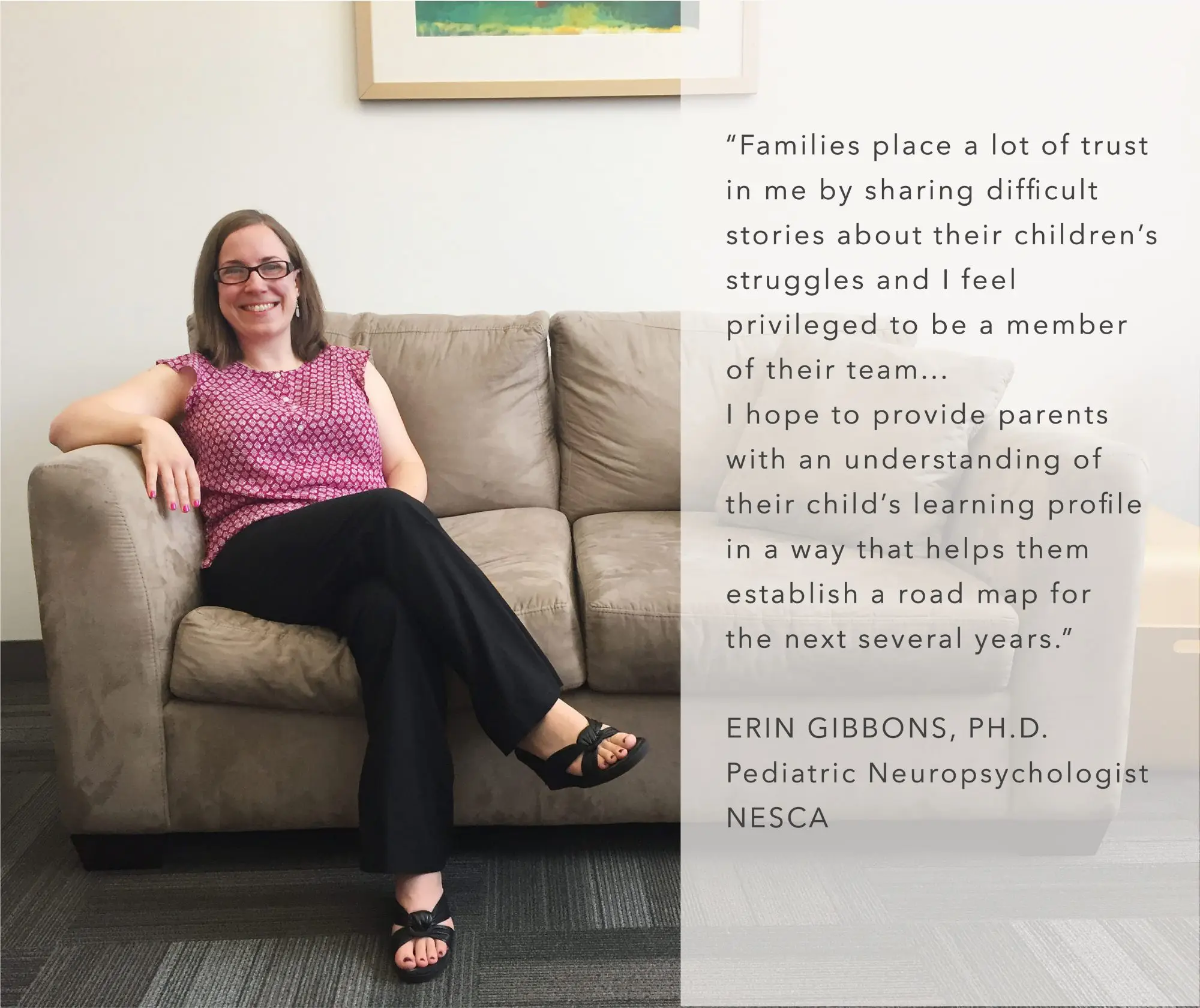
  By: Ashlee Cooper Marketing and Outreach Coordinator, NESCA   What is neuropsychology? How did you get interested in this field? My first introduction to neuropsychology was as a college student when I took coursework in neuroscience and cognition and found it to be fascinating. However, when I started graduate school, I was initially intimidated by neuropsychology courses as I...


Social Creativity and ASD – Challenging the assumption that autistic people are not social

By: Rebecca Girard, LICSW, CAS Licensed Clinical Social Worker The New York Times recently published an opinion piece titled, How to Meet Autistic People Halfway, an article that challenges the common belief that people on the autism spectrum are avoidant of social interaction and do not desire social connections. The authors, Vikram K. Jaswal and Nameera Akhtar are psychologists and researchers who...


The Struggle is Not Only Real, It is Necessary

  By: Angela Currie, Ph.D. Pediatric Neuropsychologist From an early age, we are subliminally taught that stress is a bad thing. Whether frustrated because your LEGO tower broke or confused about which two paint colors to mix to get green, you were more likely to hear “Calm down – no reason to get stressed,” than you were to hear “Let’s use...


Modern Parenting: Moving Beyond the Standards of Screen Time

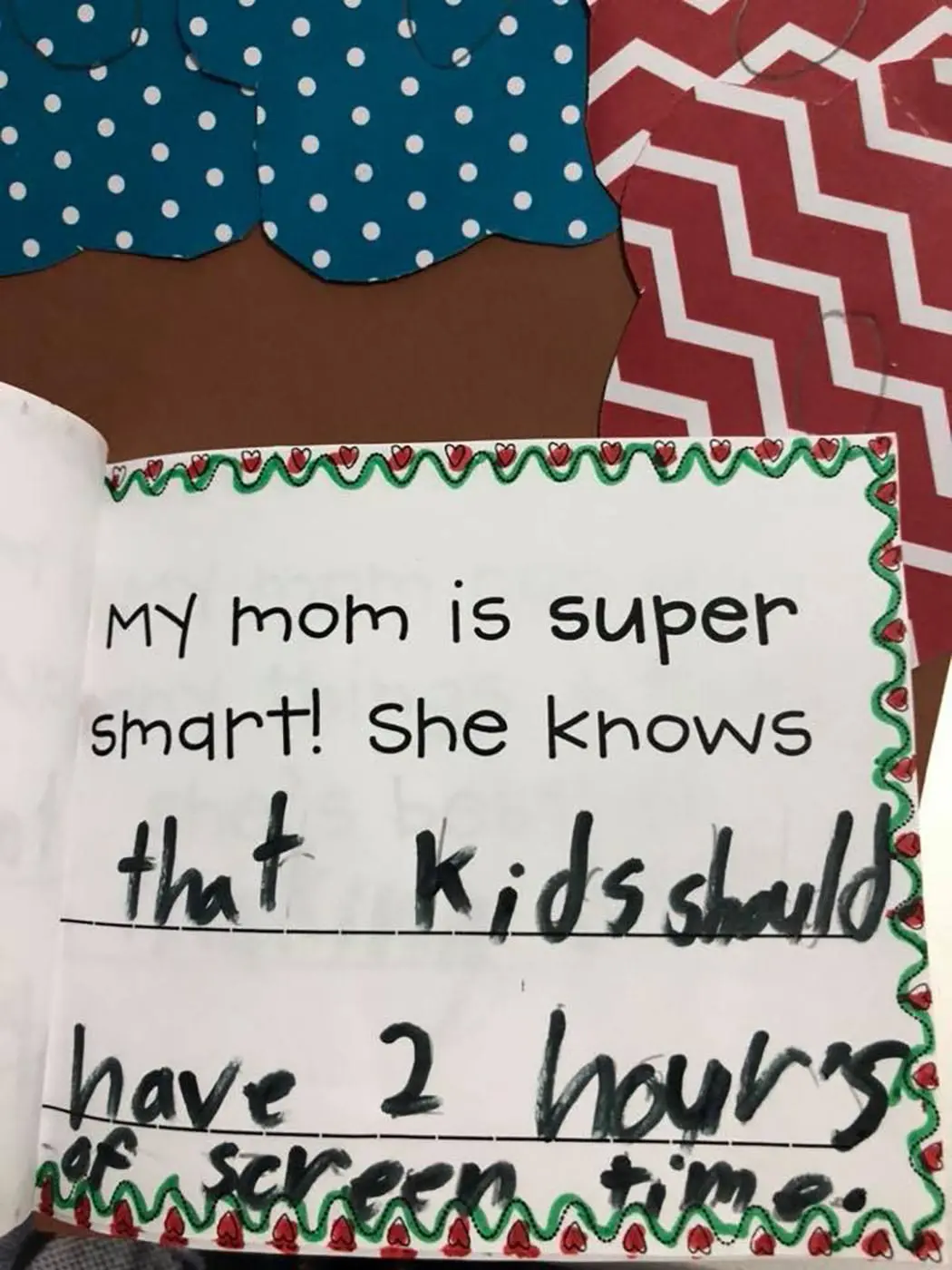
  By: Jacki Reinert, Psy.D., LMHC Pediatric Neuropsychology Post-Doctoral Fellow Content is king. Not all content is created equal. Recently I received a sweet, hand-made Mother’s Day gift from my son. On small pieces of paper, he meticulously filled in a series of incomplete sentences, ranging from “My mom can do many things. I think she’s best at making art” to...


How Language Difficulties Impact Math Development

  By:  Alissa Talamo, Ph.D. Pediatric Neuropsychologist Did you know research shows that 43-65% of students diagnosed with Dyslexia also struggle with math at a level that meets criteria for a Specific Learning Disability in Math? This is in comparison to the general population, where 5-7 % of the population meet criteria for a Specific Math Disability (Dyscalculia – difficulties...


First Recommendation: Take up Golf

  By: Ann Helmus, Ph.D. NESCA Founder/Director A five-year old boy, whom I will call Marcel, was referred by his parents for evaluation to determine if he had Autism Spectrum Disorder (ASD) because he isolated himself socially. With a great deal of effort, I got Marcel through the neuropsychological evaluation process and observed him at his pre-school. Results of the evaluation...


Transition Planning: Let’s Talk about Graduation Dates for Students on IEPs

  By: Kelley Challen, Ed.M., CAS Director of Transition Services; Transition Specialist On March 26, the Massachusetts Department of Elementary and Secondary Education (DESE) sent out an important administrative advisory regarding transition services and graduating with a high school diploma (Administrative Advisory SPED 2018-2: Secondary Transition Services and Graduation with a High School Diploma). This much-needed advisory clarifies when and how...


The Role of Pediatric Occupational Therapy

By: Sophie Bellenis, OTD, OTR/L Occupational Therapist; Community-Based Skills Coach In order to fully understand the role that occupational therapy can play in pediatric health and wellbeing, it is first important to understand the term “occupation.”  The World Federation of Occupational Therapy (WFOT) defines occupations as, “the everyday activities that people do as individuals, in families, and in communities that occupy...


Neurodevelopmental Evaluations – Where and When to Start

By: Erin Gibbons, Ph.D. Pediatric Neuropsychologist, NESCA Parenthood is a daunting task to say the least. Not only must we worry about keeping our children healthy and safe, but we are constantly bombarded with information about potentially harmful foods, chemicals, toys, etc. Many parents also have concerns about whether their children are meeting developmental milestones on time and/or whether they should...


Pre-Employment Transition Services – What Are They and Who Is Eligible?

  What are MRC Pre-Employment Transition Services (Pre-ETS)? How Could They Help Your Child on an IEP? By: NESCA Transition Specialist On July 22, 2014, the Workforce Innovation and Opportunity Act (WIOA) was signed into national law. The goal of the act is to help job seekers, including vulnerable populations such as individuals with disabilities, to access education, training, and...


Understanding Motivation in Children and Teenagers, and Where We Went Wrong

By: Angela Currie, Ph.D. Pediatric Neuropsychologist Director of New Hampshire Operations As parents and teachers, we hear, and say, these things all the time: “Why doesn’t he just do it?” “How many times do I have to ask you?” “Why don’t you care about your work?” “She just doesn’t have the drive.” Be it schoolwork, chores, or social events, some kids...


Increasing Reading Success: Early Identification of Reading Challenges

  By:  Alissa Talamo, Ph.D. Pediatric Neuropsychologist I recently attended the International Dyslexia Association Conference in Atlanta, GA (dyslexiaida.org). Among the conference attendees were researchers, teachers, speech-language pathologists, psychologists, and parents of children with dyslexia. One recurring key point was the importance of early identification of reading difficulties, as early provision of appropriate interventions and services leads to better outcomes....


Emerging Psychosis: When to worry about your teen’s thinking

  By:  Stephanie Monaghan-Blout, Psy.D. Pediatric Neuropsychologist Emerging Psychosis: When to Worry about Your Teen’s Thinking Teenagers are famous for incidents of bad judgment and poorly considered decisions; it is one of the rites of passage for parents and children to have had at least one “What were you thinking?” discussion before the teen leaves the family nest for college...